Korea Mosque List — Every Masjid in South Korea with Addresses Prayer Times and Directions 2026
Korea Mosque List — Every Masjid in South Korea with Addresses Prayer Times and Directions for Muslim Travelers and Residents
Knowing the location of every mosque in South Korea is essential for Muslim travelers planning a trip and for the growing Muslim community of residents, workers, and students who need reliable daily prayer spaces across the country. South Korea has over 20 mosques and Islamic centers spread from Seoul to Jeju Island, serving a Muslim population estimated at 150,000 to 200,000 people including foreign workers, international students, expat professionals, and a small but dedicated Korean Muslim community. This master directory lists every mosque and masjid in South Korea with exact addresses, prayer times, Friday Jumu’ah schedules, facilities, nearest subway stations, and practical directions — so no matter which Korean city you are in, you can find the closest place to pray within minutes.
How Many Mosques Are in South Korea
South Korea has approximately 20 to 25 mosques and Islamic prayer centers across the country, with the number gradually increasing as the Muslim population grows. The majority are concentrated in the Seoul metropolitan area, but significant mosques also exist in Busan, Daejeon, Daegu, Gwangju, Gyeongju, and Jeju Island. The Korea Muslim Federation (KMF), headquartered at the Seoul Central Mosque, oversees most registered mosques in the country. Every mosque listed below is verified, operational, and open to visitors regardless of nationality, sect, or Korean language ability.
Complete Korea Mosque Directory — Seoul and Gyeonggi Province
Seoul Central Mosque (서울중앙성원)
The Seoul Central Mosque is the largest, most important, and most visited mosque in South Korea. It serves as the spiritual center of the Korean Muslim community, the headquarters of the Korea Muslim Federation, and the first destination for every Muslim visitor arriving in Seoul. Built in 1976 on a hill in the Itaewon neighborhood, the mosque’s two white minarets are visible from the surrounding streets and serve as a landmark for the entire Usadan-ro halal district.
| Detail | Information |
|---|---|
| Full Name | Seoul Central Mosque (서울중앙성원) |
| Address | 39 Usadan-ro 10-gil, Yongsan-gu, Seoul |
| Nearest Station | Line 6 Itaewon Station, Exit 3 (10-minute walk uphill) |
| Phone | +82-2-793-6363 |
| Capacity | Main hall approximately 800, courtyard overflow approximately 2,000 |
| Facilities | Main prayer hall (men ground floor, women upper floor), wudu area, Islamic library, Korea Muslim Federation office, Islamic bookstore, community center basement |
| Friday Jumu’ah | Khutbah 1:00 PM, Prayer 1:30 PM (arrive by 12:30 PM for indoor spot) |
| Daily Prayers | All five daily prayers held — times posted at mosque entrance and on KMF website |
| Special Events | Daily iftar during Ramadan, Eid prayers, Islamic education classes, new Muslim guidance sessions |
| Language | Khutbah primarily in Arabic with Korean translation. Staff speak Arabic, English, Korean, and Urdu. |
| Parking | Very limited — use public transport. Nearest paid parking at Itaewon Station parking lot. |
Visitor etiquette: Remove shoes before entering the prayer hall. Men pray on the ground floor; women pray on the upper floor accessed by a separate staircase on the right side of the building. Dress modestly — men should wear long pants and a shirt; women should wear loose clothing covering arms, legs, and hair with a headscarf. Photography inside the prayer hall is discouraged during prayer times but is generally permitted in the courtyard and exterior areas.
▶ Find Seoul Central Mosque on Naver Map
Ansan Islamic Center (안산 이슬람 센터)
The Ansan Islamic Center serves the large Muslim community in Ansan city, which has one of the highest concentrations of foreign Muslim workers in South Korea. Many workers from Bangladesh, Pakistan, Indonesia, and Central Asian countries live in the Wongok-dong multicultural neighborhood near this mosque.
| Detail | Information |
|---|---|
| Full Name | Ansan Islamic Center |
| Address | Wongok-dong, Danwon-gu, Ansan-si, Gyeonggi-do |
| Nearest Station | Line 4 Ansan Station, then bus or 15-minute taxi |
| Friday Jumu’ah | Approximately 1:00 PM |
| Facilities | Prayer hall, wudu area, community gathering space |
| Community | Predominantly South Asian and Southeast Asian Muslim workers |
▶ Find Ansan Islamic Center on Naver Map
Suwon Masjid (수원 마스지드)
| Detail | Information |
|---|---|
| Full Name | Suwon Islamic Center / Masjid Suwon |
| Address | Suwon-si, Gyeonggi-do (near Suwon Station area) |
| Nearest Station | Line 1 Suwon Station |
| Friday Jumu’ah | Approximately 1:00 PM |
| Community | Mixed international Muslim community including students from nearby universities |
▶ Find Suwon Masjid on Naver Map
Other Seoul and Gyeonggi Prayer Spaces
- University prayer rooms: Korea University, Yonsei University, Hanyang University, Seoul National University, Sungkyunkwan University, Kyung Hee University, Ewha Womans University, and KAIST (Daejeon) all have dedicated multi-faith or Muslim prayer rooms. See our Muslim Student Life guide for detailed locations and access instructions.
- Incheon Airport prayer rooms: Terminal 1 near Gate 30, Terminal 2 near Gate 250 — open 24 hours with wudu facilities and qibla direction marked.
- Goyang Islamic Center: Serves the Muslim community in the Goyang and Ilsan area of northern Gyeonggi Province.
Complete Korea Mosque Directory — Busan and Gyeongsang Province
Busan Al-Fatah Mosque (부산 알파타 모스크)
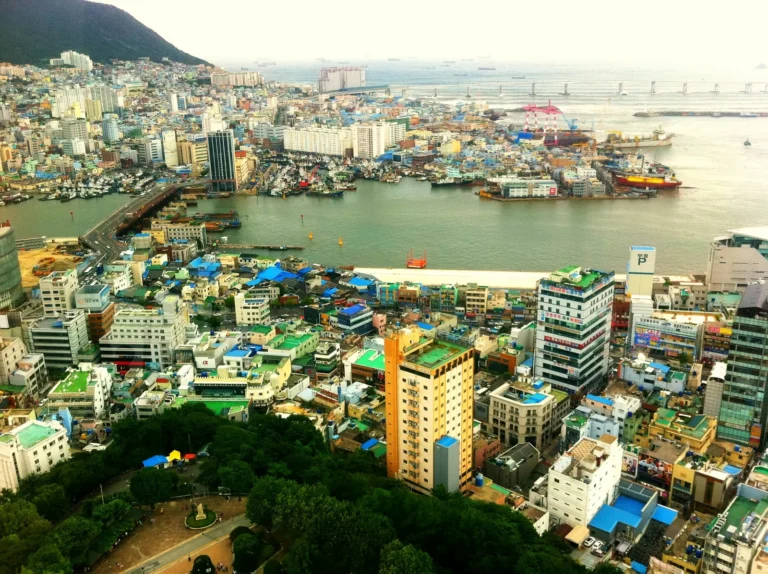
The Busan Al-Fatah Mosque is the main mosque serving South Korea’s second-largest city and its surrounding metropolitan area of 3.5 million people. Located in the Bosu-dong neighborhood of Jung-gu (central Busan), the mosque serves a diverse community of Muslim workers, students, and travelers visiting Busan’s famous beaches and cultural sites.
| Detail | Information |
|---|---|
| Full Name | Busan Al-Fatah Mosque (부산 알파타 모스크) |
| Address | 33-11 Bosu-dong 2-ga, Jung-gu, Busan |
| Nearest Station | Line 1 Jagalchi Station or Nampo Station (10-minute walk) |
| Friday Jumu’ah | Approximately 1:00 PM |
| Facilities | Prayer hall, wudu area, Islamic community center |
| Nearby Halal Food | Indian and Pakistani restaurants within 5-minute walk; halal seafood restaurants in Jagalchi Market area |
| Community | Mixed — South Asian workers, Middle Eastern traders, Southeast Asian students, local Korean Muslims |
For Muslim travelers visiting Busan: The mosque is located in the central Busan area near Jagalchi Fish Market and Nampo-dong shopping district, making it easy to combine Friday prayer with sightseeing. The qibla direction from Busan is approximately 253 degrees (west-southwest), nearly identical to Seoul.
▶ Find Busan Al-Fatah Mosque on Naver Map
Gyeongju Islamic Center
| Detail | Information |
|---|---|
| Full Name | Gyeongju Islamic Center |
| Address | Gyeongju-si, Gyeongsangbuk-do |
| Community | Small but active community of Muslim workers and tourists visiting the UNESCO heritage city |
| Friday Jumu’ah | Check locally — may not hold Jumu’ah every week due to small community size |
Complete Korea Mosque Directory — Daejeon and Chungcheong Province
Daejeon Islamic Center (대전 이슬람 센터)
The Daejeon Islamic Center serves Muslim students and researchers at KAIST (Korea Advanced Institute of Science and Technology), Chungnam National University, and other Daejeon-area institutions, as well as Muslim workers in the city’s industrial sectors.
| Detail | Information |
|---|---|
| Full Name | Daejeon Islamic Center |
| Address | Daejeon-si (central Daejeon area) |
| Nearest Station | Daejeon Station — bus or taxi required |
| Friday Jumu’ah | Approximately 1:00 PM |
| Facilities | Prayer hall, wudu area, community space |
| Community | Predominantly KAIST and university-affiliated Muslim students and researchers |
Note for KAIST students: KAIST campus also has a dedicated prayer room in the cultural center building with 24-hour access. The campus prayer room is more convenient for daily prayers, while the Daejeon Islamic Center is preferred for Friday Jumu’ah and community gatherings. The qibla direction from Daejeon is approximately 253 degrees, the same as Seoul and Busan.
▶ Find Daejeon Islamic Center on Naver Map
Complete Korea Mosque Directory — Daegu and North Gyeongsang
Daegu Islamic Center (대구 이슬람 센터)
Daegu, South Korea’s third-largest city by metropolitan population, has an active Muslim community centered around its Islamic center. The city’s textile and manufacturing industries employ many Muslim workers from South Asia and Southeast Asia.
| Detail | Information |
|---|---|
| Full Name | Daegu Islamic Center |
| Address | Daegu-si (central Daegu area) |
| Nearest Station | Daegu Station or Banwoldang Station (Line 1 or 2) |
| Friday Jumu’ah | Approximately 1:00 PM |
| Facilities | Prayer hall, wudu area, Islamic community center |
| Nearby Halal Food | Limited — a few Indian restaurants near the center; most community members cook at home with halal meat purchased during trips to Seoul’s Usadan-ro |
▶ Find Daegu Islamic Center on Naver Map
Complete Korea Mosque Directory — Gwangju and Jeolla Province
Gwangju Islamic Center (광주 이슬람 센터)
Gwangju, the cultural capital of southwestern Korea, has a small but dedicated Muslim community primarily composed of university students from Africa, the Middle East, and South Asia studying at Chonnam National University and other local institutions.
| Detail | Information |
|---|---|
| Full Name | Gwangju Islamic Center |
| Address | Gwangju-si (central Gwangju area) |
| Nearest Station | Gwangju Station or Ssangchon Station |
| Friday Jumu’ah | Approximately 1:00 PM (check locally for confirmation) |
| Community | Predominantly African and South Asian university students |
▶ Find Gwangju Islamic Center on Naver Map
Complete Korea Mosque Directory — Jeju Island
Jeju Islamic Center (제주 이슬람 센터)
Jeju Island, one of Korea’s most popular tourist destinations, has a small Islamic prayer facility serving both the local Muslim community and the growing number of Muslim tourists visiting the island. While Jeju does not have a full-scale mosque building, the Islamic center provides prayer space and basic facilities.
| Detail | Information |
|---|---|
| Full Name | Jeju Islamic Center |
| Address | Jeju-si, Jeju-do |
| Friday Jumu’ah | Check locally — Jumu’ah may not be held every week depending on community size |
| Alternative for Tourists | If the Islamic center is not open during your visit, use your hotel room for prayer. The qibla from Jeju is approximately 254 degrees southwest. |
| Halal Food on Jeju | Very limited. Seafood restaurants near Jeju harbor serve grilled fish and shellfish that are halal-safe by default. A few halal-friendly restaurants have opened near Jeju City to serve Muslim tourists from Southeast Asia. |
Tip for Muslim tourists on Jeju Island: Jeju’s seafood culture means that many local restaurants serve fresh grilled fish, abalone, and shellfish without pork or alcohol in the preparation. Restaurants near the harbor areas in Jeju City and Seogwipo are the best options. Always confirm that no pork or cooking wine is used in sauces. Pack halal snacks and instant noodles from Seoul for meals between seafood restaurant visits.
▶ Find Jeju Islamic Center on Naver Map
Quick Reference — All Mosques in Korea at a Glance
| Mosque | City | Friday Jumu’ah | Nearest Transit | Main Community |
|---|---|---|---|---|
| Seoul Central Mosque | Seoul | 1:00 PM khutbah, 1:30 PM prayer | Line 6 Itaewon Stn Exit 3 | All nationalities |
| Ansan Islamic Center | Ansan | 1:00 PM | Line 4 Ansan Stn | South Asian, SE Asian workers |
| Suwon Masjid | Suwon | 1:00 PM | Line 1 Suwon Stn | International students and workers |
| Busan Al-Fatah Mosque | Busan | 1:00 PM | Line 1 Jagalchi Stn | Mixed international |
| Gyeongju Islamic Center | Gyeongju | Check locally | Bus from Gyeongju Stn | Workers and tourists |
| Daejeon Islamic Center | Daejeon | 1:00 PM | Daejeon Stn (taxi) | KAIST and university students |
| Daegu Islamic Center | Daegu | 1:00 PM | Daegu Stn or Banwoldang | South Asian workers |
| Gwangju Islamic Center | Gwangju | 1:00 PM | Gwangju Stn | African and Asian students |
| Jeju Islamic Center | Jeju | Check locally | Bus from Jeju City | Small local community and tourists |
What to Do When There Is No Mosque in Your Korean City
If you are in a Korean city without a mosque — such as Ulsan, Changwon, Cheonan, Wonju, Gangneung, or any smaller city — you can still perform your daily prayers and even Friday Jumu’ah with proper planning.
Daily Prayers Without a Mosque
- Pray in your apartment or hotel room: Determine the qibla direction (approximately 252 to 254 degrees from any location in Korea) using a qibla compass app. Use a clean section of floor or a towel as your prayer surface. This is the simplest and most common solution for Muslims living in Korean cities without mosques.
- Use your workplace break room: Many Muslims working in Korean factories and offices perform Dhuhr and Asr prayers during lunch and afternoon breaks in an empty meeting room or quiet corner. Most Korean employers are accommodating when the request is explained respectfully.
- University prayer rooms: If you are near any Korean university, check whether the campus has a multi-faith prayer room — many do, even at smaller regional universities.
- Empty parking structures: Underground parking lots in Korean apartment complexes and shopping centers offer private, clean, climate-controlled spaces where prayer can be performed without disturbance during off-peak hours.
Friday Jumu’ah Without a Nearby Mosque
If the nearest mosque is more than 1 hour away by public transport, Islamic jurisprudence provides flexibility for Friday prayer. You may perform Dhuhr prayer instead of Jumu’ah if reaching a mosque is genuinely impractical due to distance, work schedule, or transportation limitations. However, if you can travel to the nearest mosque once a week or even once a month, making that effort is spiritually valuable and connects you with the broader Muslim community in Korea.
Mosque Construction and New Islamic Centers in Korea
The Muslim population in South Korea continues to grow, driven by international student enrollment, labor migration from Muslim-majority countries, and a small but steady number of Korean converts to Islam. As a result, new prayer spaces and Islamic centers are being established in cities that previously had no mosque at all. The Korea Muslim Federation coordinates mosque construction efforts and welcomes donations from the global Muslim community to support the development of Islamic infrastructure in Korea. If you are living in a Korean city without a mosque and wish to help establish one, contact the KMF at the Seoul Central Mosque for guidance on the process.
Qibla Direction Reference for All Korean Cities
The qibla direction is remarkably consistent across South Korea due to the country’s relatively compact geography. All Korean cities face the qibla at approximately 252 to 254 degrees (west-southwest), as Mecca is located far to the southwest of the Korean peninsula.
| City | Qibla Bearing | Direction | Distance to Mecca |
|---|---|---|---|
| Seoul | 252 degrees | Southwest | 8,335 km |
| Busan | 253 degrees | West-southwest | 8,300 km |
| Incheon | 252 degrees | Southwest | 8,320 km |
| Daejeon | 253 degrees | West-southwest | 8,220 km |
| Daegu | 253 degrees | West-southwest | 8,260 km |
| Gwangju | 253 degrees | West-southwest | 8,150 km |
| Ulsan | 253 degrees | West-southwest | 8,310 km |
| Jeju | 254 degrees | West-southwest | 8,090 km |
| Sejong | 253 degrees | West-southwest | 8,250 km |
| Suwon | 252 degrees | Southwest | 8,320 km |
The variation across all Korean cities is less than 2 degrees, meaning that if you memorize 253 degrees as the qibla bearing for Korea, you will be accurate within 1 degree no matter which city you are in. For a complete list of qibla bearings from cities worldwide, see our global qibla direction reference guide.
Visiting Korean Mosques as a Tourist — What to Expect
If you are a Muslim tourist visiting Korea and want to attend prayer at a Korean mosque for the first time, here is what to expect:
- Everyone is welcome: Korean mosques do not check identification, require registration, or restrict entry based on nationality, ethnicity, or appearance. Simply walk in, remove your shoes, and find a spot in the prayer hall.
- The community is diverse: At Seoul Central Mosque on a typical Friday, you will pray shoulder to shoulder with Muslims from Indonesia, Pakistan, Bangladesh, Egypt, Turkey, Nigeria, Malaysia, Uzbekistan, Korea, and dozens of other countries. Arabic, English, Korean, Urdu, Bahasa, and Turkish can all be heard in the courtyard after prayer.
- Language is not a barrier: The Friday khutbah at Seoul Central Mosque is delivered primarily in Arabic with Korean translation. If you do not speak Arabic or Korean, the prayer itself follows the same format you know from your home country — the Arabic recitations are identical worldwide.
- Post-prayer socializing: After Friday prayer, the courtyard of Seoul Central Mosque becomes a vibrant social space where Muslims from different countries exchange greetings, share food, discuss community matters, and make new friends. This is one of the best opportunities for Muslim travelers to connect with the local community.
- Free food during Ramadan: During the holy month of Ramadan, the Seoul Central Mosque basement hosts free communal iftar every evening, serving hundreds of Muslims with dates, rice, curry, and fruit. This tradition is funded entirely by community donations and is open to every Muslim without exception.
Frequently Asked Questions About Mosques in Korea
Is there a mosque in every Korean city?
No. While major cities like Seoul, Busan, Daejeon, Daegu, Gwangju, and Ansan have dedicated mosques or Islamic centers, many smaller Korean cities do not have a mosque. However, Muslims in cities without mosques can pray in their homes, workplaces, or university prayer rooms. The qibla direction from every Korean city is approximately 252 to 254 degrees southwest, making it easy to determine the correct prayer direction using a phone compass app even without a marked prayer room.
Can non-Muslims visit Korean mosques?
Yes. Korean mosques, particularly the Seoul Central Mosque, welcome non-Muslim visitors who wish to learn about Islam and observe Muslim worship. Visitors should remove their shoes, dress modestly (long pants and sleeved shirts for men; loose clothing covering arms, legs, and hair for women), and remain quiet during prayer times. The Seoul Central Mosque courtyard is open to visitors throughout the day. Non-Muslim visitors are welcome to observe Friday prayer from the back of the main hall or the courtyard. The Korea Muslim Federation occasionally organizes open-house events and guided mosque tours for non-Muslim guests.
What time is Friday prayer at Korean mosques?
Friday Jumu’ah prayer at all major Korean mosques begins with the khutbah (sermon) at approximately 1:00 PM, followed by the congregational prayer at approximately 1:30 PM. This timing is consistent across Seoul, Busan, Daejeon, Daegu, and Gwangju. Smaller Islamic centers may have slightly different timing — check locally for confirmation. At the Seoul Central Mosque, arriving by 12:30 PM is recommended during nice weather, as the main hall fills quickly and overflow attendees pray in the courtyard. During winter, the basement community center provides additional indoor prayer space.
Are Korean mosques open every day?
Yes. The Seoul Central Mosque and all major Korean mosques are open every day for all five daily prayers. The mosque buildings themselves may have limited access outside of prayer times (the main prayer hall may be locked between prayers), but the courtyard and exterior areas are generally accessible throughout the day. During Ramadan, mosques extend their opening hours significantly, remaining open from Fajr (pre-dawn) through Taraweeh (late night) prayers.
Is there parking at Korean mosques?
Parking at the Seoul Central Mosque is extremely limited — the narrow streets of Usadan-ro were not designed for vehicle traffic, and there is no dedicated parking lot. The nearest paid parking is at Itaewon Station public parking garage (approximately 3,000 KRW per hour). For Friday prayer, public transport is strongly recommended: take subway Line 6 to Itaewon Station, Exit 3, and walk 10 minutes uphill. Mosques in other Korean cities (Busan, Daejeon, Daegu) may have small parking lots available on a first-come basis.
Do Korean mosques provide wudu (ablution) facilities?
Yes. The Seoul Central Mosque has dedicated wudu (ablution) facilities on the ground floor near the entrance to the men’s prayer hall, with running water taps at the appropriate height for washing hands, face, arms, and feet. Women have a separate wudu area on the upper floor. All other Korean mosques listed in this directory have basic wudu facilities with running water. If you are praying outside a mosque (in your apartment, hotel, or office), use the bathroom sink for wudu — any clean water source is valid for ablution in Islam.
Can I hear the adhan (call to prayer) at Korean mosques?
Due to Korean noise regulations, the adhan is not broadcast over external loudspeakers at Korean mosques. The adhan is called inside the mosque building only, audible to worshippers already inside or in the immediate courtyard area. This is different from mosques in Muslim-majority countries where the adhan echoes across the city. You can still hear the adhan clearly by arriving at the mosque 10 to 15 minutes before prayer time. For daily prayer notifications on your phone, use the Muslim Pro or Athan app set to Seoul’s prayer times.
Support This Korea Mosque Directory
This mosque directory is maintained as a free resource for Muslims visiting and living in South Korea. If this guide helped you find a prayer space in Korea, consider supporting the project so we can continue updating and expanding this resource.
▶ Support Muslim Qibla on Ko-fi — Help Us Maintain the Complete Korea Mosque Directory
Every mosque in Korea tells a story of faith persisting in unfamiliar soil. The white minarets of Seoul Central Mosque rising above the Itaewon skyline, the converted office space in Ansan where factory workers gather for Friday prayer after a week of hard labor, the small prayer room in Jeju where a handful of Muslims face the same qibla as 1.8 billion others around the world — these are the places where the ummah lives in Korea. Whether you are visiting Seoul for three days or living in a small Korean city for three years, a prayer space exists for you. The Kaaba is 8,300 kilometers away, but the direction is the same from every Korean city — 253 degrees, southwest, toward the house of God. Find your mosque, walk through the door, remove your shoes, and stand in the line of prayer. In that moment, you are home.
#KoreaMosqueList #MosqueInSouthKorea #SeoulCentralMosque #MasjidInKorea #BusanMosque #DaejeonMosque #DaeguMosque #GwangjuMosque #JejuMosque #MuslimPrayerKorea #FridayPrayerSeoul #MosqueNearMeKorea #KoreanMosques #IslamicCenterKorea #AnsanMosque #SuwonMasjid #KoreaMuslimFederation #WhereToPrayInKorea #MosquesInSeoul #MuslimCommunityKorea
Explore Korea by topic
Choose a focused next step for Korea travel, halal food, prayer planning, or transport.
Explore more published guides
Keep planning with more published Muslim travel guides. New cards appear as you reach the end, or choose to load the next set.
 Halal talkElazığ Airport Prayer Room (EZS): Official Mescit, Parking & Access GuideElazığ Airport (EZS) officially lists a mescit in its domestic terminal. The airport operator confirms parking is available…Open guide
  Halal talkFreetown Airport Prayer Rooms (FNA): First Floor GuideFreetown Airport has dedicated Christian and Muslim prayer facilities on the first floor, accessible to all passengers and…Open guide
  Halal talkIğdır Airport Prayer Rooms (IGD): 2 Mescits, Parking & Terminal GuideIğdır Şehit Bülent Aydın Airport (IGD) officially lists two prayer rooms in its one-storey domestic terminal. The airport…Open guide
  Halal talkKing Shaka Airport Prayer Rooms (DUR): Access GuideKing Shaka Airport has multi-faith prayer rooms for passengers. Ask an airport information desk for the current prayer-room…Open guide
  Halal talkÇorlu Atatürk Airport Prayer Rooms (TEQ): Terminal Mescit, Parking & Access GuideTekirdağ Çorlu Atatürk Airport (TEQ) officially confirms that separate women’s and men’s prayer rooms are inside its terminal…Open guide
  Halal talkCape Town Airport Prayer Room (CPT): Request Access GuideCape Town Airport can accommodate prayer-space requests. Ask any ACSA representative for the current prayer-room location and access…Open guide
  Halal talkKars Harakani Airport Prayer Rooms (KSY): 5 Mescits, Parking & Terminal GuideKars Harakani Airport (KSY) officially lists five prayer rooms: three for men and two for women. Domestic and…Open guide
  Halal talkOR Tambo Muslim Prayer Facility (JNB): 24/7 GuideOR Tambo Muslim prayer facility is open 24/7 in the basement parkade closest to Terminal A arrivals, with…Open guide
  Halal talkVan Ferit Melen Airport Prayer Rooms (VAN): Departure Hall, Gates & Parking GuideOfficial guide to prayer rooms at Van Ferit Melen Airport (VAN), including domestic departure and gate areas, parking…Open guide