Korea Muslim Travel FAQ — 50 Most Common Questions Answered for Visitors
Korea Muslim Travel FAQ — 50 Most Common Questions Answered
Every Muslim traveler planning a trip to South Korea has questions — about halal food prayer facilities visa rules safety accommodation and daily logistics — and most of those questions have been asked by thousands of Muslim visitors before you. This comprehensive FAQ collects the 50 most frequently asked questions about Muslim travel in Korea and answers each one with specific practical actionable information so that by the time you finish reading this page there is nothing left to wonder about. Whether you are planning your first trip to Korea or your fifth this FAQ is your definitive reference for every concern and curiosity a Muslim traveler could have about exploring this remarkable country.
Halal Food — Frequently Asked Questions
1. Is it hard to find halal food in Korea?
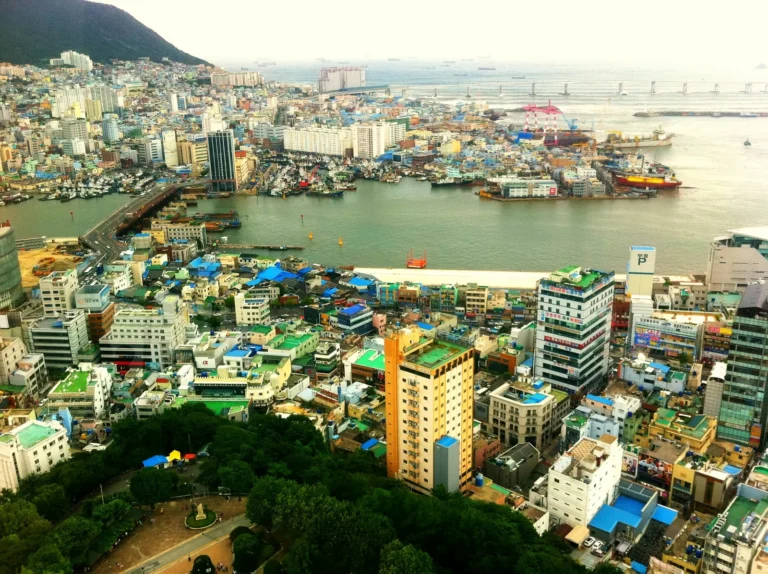
Finding halal food in Seoul is straightforward thanks to the Usadan-ro halal district near Seoul Central Mosque in Itaewon which has over 10 halal restaurants halal butcher shops and halal grocery stores all within a 5-minute walk of each other. Beyond Seoul halal food requires more planning — Busan has halal restaurants near its mosque and every Korean city has seafood restaurants where halal-compatible fish and shellfish dishes are available. The real strategy is to stock up on halal provisions from Usadan-ro before traveling to smaller cities and supplement with seafood restaurants and convenience store items throughout your trip.
2. What Korean dishes are naturally halal-friendly?
Several popular Korean dishes use ingredients that are inherently halal-compatible. Grilled mackerel (고등어구이) is simply fish and salt. Grilled hairtail fish (갈치구이) from Jeju is seasoned fish. Vegetable bibimbap (나물비빔밥) is rice topped with assorted vegetables — confirm no meat or pork broth in the sauce. Japchae (잡채) glass noodle stir-fry can be halal when made with beef instead of pork. Haemul pajeon (해물파전) seafood pancake is halal-compatible when no pork is added to the batter. Seaweed soup (미역국) made with beef or anchovy broth is halal-safe. The key is always confirming the specific ingredients with the restaurant using the Papago translation app.
▶ Find Usadan-ro Halal Restaurants on Naver Map
3. Is Korean BBQ halal?
Standard Korean BBQ restaurants are not halal because they typically serve pork alongside beef and the same grills are used for all meats. However halal Korean BBQ is available at Salahuddin Restaurant and Yang Good in Seoul which use certified halal beef on dedicated grills. At non-halal Korean BBQ restaurants you can request beef-only service on a clean grill — ask for the grill to be replaced before cooking and verify that no pork-based marinades are used on the beef.
4. Is Korean kimchi halal?
Traditional Korean kimchi is made with napa cabbage garlic ginger red pepper flakes and fermented seafood sauce made from shrimp or anchovies which are halal-compatible seafood. Standard Korean kimchi is halal-compatible for the vast majority of Muslim consumers. The only concern would be if a specific kimchi recipe included fermented tiny shrimp paste that might contain trace marine organisms — but this is still seafood and therefore halal. Very rarely would any pork-based ingredient be added to kimchi.
5. Can I find halal food at Korean convenience stores?
Korean convenience stores (CU GS25 7-Eleven) sell several halal-friendly items including tuna rice triangles (참치 삼각김밥) roasted seaweed sheets (구운김) banana milk yogurt fruit cups plain rice cups seafood-flavored instant noodles and various snacks. While these items are not halal-certified their ingredients are compatible with halal standards when checked individually. Convenience stores are open 24 hours and located on virtually every major street making them the most accessible halal-friendly food source for Muslim travelers across all of Korea.
6. Are Korean instant noodles halal?
Most Korean instant noodles in meat flavors (shin ramyeon beef ramyeon kimchi ramyeon) contain pork broth or pork-derived ingredients and are not halal. However seafood-flavored instant noodles (haemul ramyeon) and vegetable-flavored noodles are generally halal-safe. Check the ingredient list using the Papago translation app. Several Korean instant noodle brands now carry halal certification for specific products exported to Muslim-majority countries.
7. How do I explain halal dietary needs to Korean restaurant staff?
The most effective approach is a three-part strategy. First show the Korean text on your phone screen: “저는 돼지고기와 술이 들어간 음식을 먹을 수 없습니다” (I cannot eat food containing pork or alcohol). Second use the Papago translation app for real-time conversation translation. Third point at specific menu items and ask “돼지고기 들어있어요?” (Does this contain pork?). Korean restaurant staff in tourist areas are increasingly familiar with halal dietary requests from Muslim tourists.
8. Where can I buy halal meat in Seoul?
Usadan-ro in Itaewon has multiple halal butcher shops that sell fresh halal chicken beef and lamb alongside imported halal frozen products. These shops are open daily from 9:00 AM to 9:00 PM. For delivery to your accommodation anywhere in Korea order halal meat through Coupang (Korea’s largest online retailer) by searching “할랄” (halal) in the app — next-day delivery is available nationwide.
9. Is street food in Korea halal?
Most Korean street food is not halal-certified and many items contain pork or are cooked in shared oil with pork products. However some street food items are halal-compatible — grilled seafood skewers roasted chestnuts sweet pancakes (hotteok without meat filling) and fresh fruit cups are generally safe. Use the Papago camera translation feature to read street food stall ingredient lists. Avoid any street food item containing 햄 (ham — usually pork), 베이컨 (bacon), or 소시지 (sausage — usually pork).
10. What about food delivery apps in Korea for halal food?
Korea’s food delivery apps Baemin (배달의민족) and Yogiyo (요기요) can be used to order from halal restaurants for delivery to your accommodation. Set your delivery address near Itaewon to access Usadan-ro halal restaurants. Search for specific restaurant names like EID Kervan or Makan in the app. For other areas search “해산물” (seafood) for halal-compatible seafood delivery options. You need a Korean phone number and address to use these apps.
Prayer and Mosques — Frequently Asked Questions
11. How many mosques are there in South Korea?
South Korea has approximately 15 to 20 permanent mosques and Islamic centers with the Seoul Central Mosque being the largest. Beyond permanent mosques there are numerous prayer rooms at universities airports shopping malls and community spaces bringing the total number of prayer facilities to over 50. The Korea Muslim Federation at +82-2-793-6908 maintains the most current directory.
12. Is there a mosque on Jeju Island?
There is currently no permanent mosque on Jeju Island. The Jeju Muslim community occasionally organizes Friday Jumu’ah prayers at rented community halls — contact the Korea Muslim Federation before your trip to learn about current arrangements. For daily prayers use the multi-faith prayer room at Jeju International Airport upon arrival and departure and perform other prayers at your accommodation or at beautiful outdoor locations such as quiet coastal parks.
13. Can non-Korean Muslims visit Seoul Central Mosque?
Absolutely. The Seoul Central Mosque welcomes all Muslims regardless of nationality. On any given Friday you will find worshippers from over 30 countries. Tourists are welcome at all five daily prayers Jumu’ah and all special events including Ramadan iftar and Eid prayers. Simply walk in remove your shoes and enter the prayer hall.
14. Are there halal restaurants near every mosque in Korea?
Halal restaurants are most abundant near the Seoul Central Mosque on Usadan-ro. The Busan Masjid in Bosu-dong also has halal restaurants within walking distance. For other Korean cities the mosque community members are the best source of local halal food recommendations. Additionally every major Korean city has seafood restaurants where halal-compatible dishes can be ordered.
15. What should I wear when visiting a Korean mosque?
Dress modestly. Men should wear long pants and a shirt covering the shoulders. Women should wear loose-fitting clothing covering arms legs and hair with a headscarf. Remove your shoes before entering the prayer hall — shoe racks are provided at the entrance. Socks can be worn inside the prayer hall.
16. Can women visit Korean mosques?
Yes. All Korean mosques have separate women’s prayer sections. The Seoul Central Mosque has a dedicated women’s floor above the main men’s prayer hall with its own entrance wudu facilities and prayer space. Women are welcome at all five daily prayers Jumu’ah and special events.
17. How do I pray five times a day while sightseeing in Seoul?
The most effective strategy combines three approaches. First perform Fajr and Isha at your accommodation. Second plan your midday sightseeing route to pass through the Seoul Central Mosque area around Dhuhr and Asr times. Third keep a compact prayer mat in your day bag and use Muslim Pro prayer time notifications — then find the nearest quiet space and pray there. Korean people will not disturb you if you are praying quietly in a park or outdoor space.
18. What is the qibla direction in Korea?
The qibla direction from anywhere in South Korea is approximately 252 degrees — roughly southwest. This means you should face the southwestern part of the sky. Use a qibla compass app (Muslim Pro or Qibla Connect) for precision at each location. The direction toward Mecca from Seoul points roughly toward Incheon and the Yellow Sea.
▶ Find Seoul Central Mosque on Naver Map
19. Is there a prayer room at Incheon Airport?
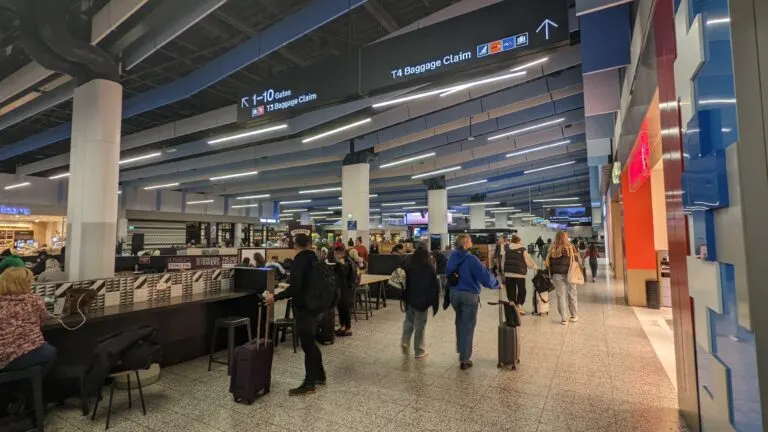
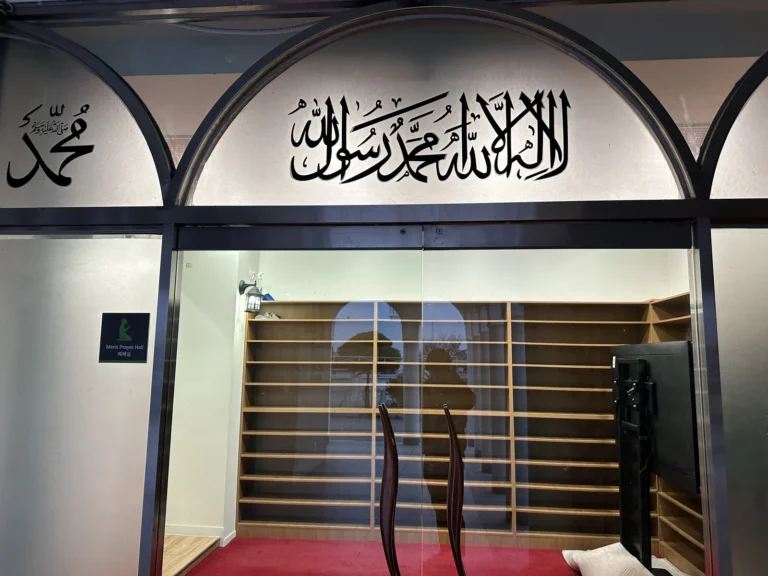
Yes. Incheon International Airport has dedicated prayer rooms in both terminals. Terminal 1 prayer room is located near Gate 26 on the departure level 3F. Terminal 2 prayer room is near Gate 250 on the departure level 3F. Both rooms are open 24 hours with qibla direction marked prayer mats available and wudu facilities at adjacent restrooms.
20. Can I combine prayers while traveling in Korea?
Yes. Islamic jurisprudence permits combining Dhuhr with Asr and Maghrib with Isha during travel. This is especially practical when on KTX trains or long bus journeys between Korean cities. Pray Dhuhr and Asr together before boarding and Maghrib and Isha together upon arrival at your destination.
Safety and Social Questions
21. Is Korea safe for Muslim travelers?
Korea is one of the safest countries in the world for Muslim travelers. The violent crime rate is among the lowest globally public transportation is secure at all hours and hijab-wearing women report feeling safe walking through Seoul at any time of day or night. Crimes against tourists are extremely rare. The extensive CCTV network and visible police presence contribute to the exceptionally safe environment.
22. Is it safe to wear hijab in Korea?
Muslim women wearing hijab can travel throughout Korea without any safety concerns related to their religious dress. Korean people react to hijab with curiosity not hostility. You may receive friendly questions like “Where are you from?” but these come from genuine innocent curiosity. Multiple Muslim women have reported feeling safer wearing hijab in Seoul than in many Western countries.
23. Will Korean people be offended by my Islamic practices?
No. Korean culture is generally tolerant and respectful of diverse religious practices. Korean people may be curious about Islam — prayer fasting halal food and Islamic dress — but this curiosity rarely crosses into disrespect. Most Koreans have a neutral or positive impression of Islam especially as the local Muslim community grows and becomes more visible. You may find that Korean people ask thoughtful questions about your faith out of genuine interest.
24. Is Korea safe for solo female Muslim travelers?
Korea is exceptionally safe for solo female Muslim travelers. The violent crime rate against women is extremely rare public transportation is safe at all hours and the culture respects personal space. Solo Muslim women wearing hijab regularly explore Seoul independently without any safety concerns. Dedicated women-only subway cars are available during morning rush hours on some lines for additional comfort.
25. What if someone offers me alcohol in Korea?
Korean social culture includes significant alcohol consumption and you may be offered drinks at social gatherings or by friendly locals. Simply smile and decline saying “아니요 괜찮습니다” (aniyo gwaenchannseumnida — no thank you). Koreans will immediately respect your choice with no further questions. There is no social penalty for declining alcohol in Korea.
26. Are there any areas of Korea that Muslims should avoid?
No. There are no areas of Korea where Muslim travelers face discrimination or danger. Every neighborhood in Seoul Busan and other major cities is safe for Muslim visitors. The Itaewon nightlife area can be loud on Friday and Saturday nights due to bar culture but the nearby Usadan-ro halal district one block away is peaceful and welcoming at all hours.
27. How do I handle someone being rude about my religion?
This is extremely rare in Korea. If it happens the best response is to disengage calmly and walk away. Korean law protects religious freedom and harassment based on religion is not tolerated. If you feel threatened call 112 (police) or approach any police officer. The tourist helpline 1330 can also assist in English and Arabic.
Visa and Entry Questions
28. Do I need a visa to visit Korea?
Citizens of most Western countries ASEAN nations and many other countries receive visa-free entry for 90 days upon arrival at Incheon Airport. Citizens of some countries including many South Asian and African nations do require a visa — check with the nearest Korean embassy or consulate for your specific nationality before booking flights. The K-ETA (Korea Electronic Travel Authorization) may also be required for some visa-free nationalities.
29. Can I extend my stay in Korea beyond 90 days?
Several options exist. The Working Holiday Visa is available to citizens of specific countries aged 18 to 30 and allows stays of up to one year. Student Visas are available for those enrolling in Korean language programs or universities. Various work visa categories exist for employment-based stays. Contact your nearest Korean embassy for current information. The Korean Muslim community can provide practical advice on long-term settlement.
30. What is K-ETA and do I need it?
K-ETA (Korea Electronic Travel Authorization) is an electronic travel authorization required for nationals of visa-free countries before entering Korea. Apply online at the official K-ETA website at least 72 hours before departure. The application requires passport information travel plans and accommodation details. Approval is usually granted within 24 hours. Check the official K-ETA website for the current list of countries requiring K-ETA as requirements change periodically.
31. Can I work in Korea as a Muslim traveler?
Tourist visa holders cannot work in Korea. To work legally you need a specific work visa sponsored by a Korean employer. The E-2 visa is for English teaching. The E-7 visa is for professional workers. The H-1 Working Holiday Visa allows limited work. The Korean Muslim community includes many long-term residents on work visas who can provide advice on the process.
Accommodation Questions
32. Where should Muslim travelers stay in Seoul?
The Itaewon and Hannam-dong area in Yongsan-gu is the best location. This neighborhood provides walking distance to Seoul Central Mosque and Usadan-ro halal restaurants direct subway access via Line 6 to all major attractions and accommodation options from budget hostels to mid-range guesthouses. Staying in Itaewon eliminates daily transportation costs for meals and prayers.
33. Can I find accommodation with a kitchen for halal self-catering?
Yes. Guesthouses with shared kitchens officetel studio apartments with full kitchens and Airbnb-style rentals with cooking facilities are widely available in Seoul especially in the Itaewon area. Prices range from 35,000 to 80,000 KRW per night. Having a kitchen allows you to cook halal meals using ingredients from Usadan-ro shops or Coupang delivery.
34. Are there female-only dorm rooms available in Seoul?
Yes. Many Seoul hostels offer female-only dorm rooms which provide additional privacy and security for solo female Muslim travelers. These are available at hostels in Itaewon Hongdae and Myeongdong. Prices start from 20,000 to 30,000 KRW per night.
35. Can I pray in my hotel room?
Yes. Any private room in Korea can serve as a prayer space. Face the qibla direction (approximately 252 degrees southwest) and pray on a clean surface or prayer mat. The room carpet or a clean towel works well as a prayer surface. Hotels do not have any restrictions on guests praying in their rooms.
36. What is the difference between a guesthouse a hostel and an officetel?
A hostel typically offers shared dorm rooms at the lowest prices (18,000 to 30,000 KRW) with shared bathrooms and common areas. A guesthouse offers private rooms and sometimes shared rooms in a home-like setting with more personal service (35,000 to 70,000 KRW). An officetel is a studio apartment in a mixed-use building with a private bathroom kitchen and washing machine offering the most independence (40,000 to 80,000 KRW). For Muslim travelers an officetel or guesthouse with a kitchen provides the best combination of privacy for prayer and facilities for halal cooking.
Budget and Money Questions
37. How much does a trip to Korea cost for a Muslim traveler?
A budget solo traveler can manage on 50,000 to 70,000 KRW (38 to 53 USD) per day staying in a hostel dorm eating convenience store meals with one halal restaurant visit daily and focusing on free attractions. A mid-range traveler spending 100,000 to 140,000 KRW (75 to 105 USD) per day can enjoy a private guesthouse room halal restaurant meals for most dining and multiple paid attractions. A week-long Seoul trip at the mid-range level costs approximately 700,000 to 1,000,000 KRW (525 to 750 USD) for one person.
38. Should I exchange money at the airport or in Seoul?
Exchange only a small amount at the airport (50,000 to 100,000 KRW) for immediate needs like transportation and a SIM card. Exchange the bulk of your money at money changers in Myeongdong Seoul where rates are 3 to 8 percent better than airport rates. Alternatively use an international debit card at Korean convenience store ATMs which dispense Korean Won directly with competitive exchange rates.
39. Can I use credit cards everywhere in Korea?
Yes. International credit cards (Visa Mastercard) are accepted at virtually every establishment in Korea including restaurants shops subway stations taxis and convenience stores. Korea is one of the most card-friendly countries in the world. Cash is needed only for traditional market street vendors and some small shops. Notify your bank before traveling to prevent your card from being blocked for international transactions.
40. Is tipping expected in Korea?
No. Tipping is not practiced in Korea and can sometimes cause confusion. Service charges are included in the price at restaurants hotels and for taxi rides. There is no need to tip at restaurants hotels or for any service in Korea. This is actually beneficial for Muslim travelers on a budget — the price you see is the price you pay.
41. What is the best transportation card for tourists?
The T-money card is the best option. Purchase it for 4,000 KRW at any convenience store at Incheon Airport upon arrival. Load 20,000 to 30,000 KRW and use it for all subway rides bus rides taxi payments and convenience store purchases throughout your trip. Every subway and bus ride with T-money saves money compared to cash tickets and transfers between modes are free within 30 minutes. Remaining balance is refundable at convenience stores before departure.
Seasonal and Weather Questions
42. What is the best time of year for Muslim travelers to visit Korea?
Spring (April to May) and autumn (September to October) are ideal. Mild temperatures of 10 to 25 degrees Celsius make outdoor prayer comfortable daylight hours are moderate for balanced prayer scheduling and the natural beauty is at its peak — cherry blossoms in spring and golden foliage in autumn. Avoid July and August if you dislike heat and humidity as Fajr arrives as early as 3:50 AM and outdoor prayer becomes uncomfortable.
43. How do I handle prayer times during Korean winter?
Korean winters are cold — down to minus 10 degrees Celsius. Strategy: use indoor restroom facilities for wudu at shopping malls museums or hotel lobbies where warm water is available. Carry a small towel to dry off after wudu. Plan prayer locations around buildings with heated restrooms. If outdoor wudu is truly impractical wet wipes can be used for tayammum. Indoor prayer is strongly recommended during extreme cold.
44. What should I pack for different Korean seasons?
Spring: light jacket long sleeves comfortable for outdoor prayer. Summer: light modest layers in breathable fabrics plus sun protection. Autumn: light jacket to medium coat. Winter: heavy coat thermal under-layers scarf and gloves. All seasons: compact prayer mat portable water bottle for wudu and modest clothing that allows comfortable prayer postures.
45. How early is Fajr in Korea during summer?
During the peak of Korean summer (late June to early July) Fajr in Seoul begins as early as 3:40 to 3:50 AM. This is the earliest prayer time of the year. By contrast in winter Fajr begins around 5:50 to 6:10 AM. The Muslim Pro app provides exact daily times for your specific location and travel dates.
Practical and Daily Life Questions
46. Do I need to speak Korean to travel in Korea?
No. You can navigate Korea entirely with English and translation apps. Subway signage and announcements are in English. Tourist areas have English-speaking staff. The Papago app provides real-time camera and voice translation for situations where English is not available. However learning a few basic Korean phrases (hello thank you excuse me) significantly improves your interactions and is appreciated by Korean people.
47. What apps do Muslim travelers need in Korea?
The essential apps are Muslim Pro (prayer times qibla compass) Papago by Naver (Korean translation — superior to Google Translate for Korean) Naver Map (Korean navigation) KakaoTalk (Korea’s messaging app) Kakao Metro (subway route planner) Kakao T (taxi hailing) and Coupang (online halal grocery delivery). Download all of these before arriving in Korea.
48. Can I find a Quran or Islamic bookshops in Korea?
The Seoul Central Mosque has an Islamic bookstore on the ground floor that sells Qurans Islamic books prayer mats hijab accessories and other Islamic items in multiple languages. Usadan-ro also has shops selling Islamic items. English-language Qurans are available. Digital Quran apps work perfectly on Korean WiFi and mobile data.
49. How do I wash prayer clothes in Korea?
Guesthouses hostels and officetels typically have shared or private washing machines. Korean coin-operated laundromats (세탁방 or 코인빨래방) are available in every neighborhood — 3,000 to 5,000 KRW per wash load. Detergent is usually included or available for 500 to 1,000 KRW. Hotels offer laundry service but at higher prices. Korean weather in spring and autumn allows line-drying modest clothing quickly.
50. What is the best piece of advice for a first-time Muslim traveler to Korea?
Base yourself in Itaewon for the first few days. From the moment you arrive at your accommodation near Itaewon Station you are within walking distance of the Seoul Central Mosque Usadan-ro halal restaurants halal grocery shops and an international community that will make you feel welcome immediately. Use your first days to establish your daily prayer routine visit the mosque meet fellow Muslims and stock up on halal provisions. Once you feel confident navigating prayer times and food in the familiar Itaewon environment expand outward to explore the rest of Seoul and then beyond. This approach transforms Korea from an intimidating foreign country into a comfortable second home from Day 1.
Quick Reference — Emergency Contacts for Muslim Travelers in Korea
| Service | Number | Language | Hours |
|---|---|---|---|
| Police Emergency | 112 | Korean English (interpretation available) | 24 hours |
| Ambulance and Fire | 119 | Korean English (interpretation available) | 24 hours |
| Tourist Helpline | 1330 | Korean English Chinese Japanese Arabic | 24 hours |
| Korea Muslim Federation | +82-2-793-6908 | Korean Arabic English | Business hours |
| Incheon Airport Information | +82-1577-2600 | Korean English | 24 hours |
▶ Find Seoul Central Mosque and Halal District on Naver Map
Fifty questions asked and fifty questions answered — but the most important answer is the one that no FAQ can provide: the feeling you will have when you stand beneath Seoul’s skyline as the adhan calls from the mosque on Usadan-ro hill and you realize that even 8,000 kilometers from Mecca the ummah is here the prayer is here the halal food is here and the welcome is here. Korea is not a Muslim country but it is a country where Muslims can travel confidently pray comfortably eat halal food daily and connect with a thriving community of fellow believers from around the world. Save this FAQ share it with fellow Muslim travelers and when your plane lands at Incheon and you have a question you cannot answer — come back to this page because the answer is almost certainly here. Assalamu alaikum — and welcome to Korea.
#KoreaMuslimFAQ #MuslimTravelKoreaFAQ #KoreaHalalFAQ #SeoulMuslimQuestions #KoreaMuslimTravelTips #HalalFoodFAQ #KoreaPrayerFAQ #SeoulCentralMosque #KoreaForMuslims #MuslimTravelFAQ #KoreaMuslimGuide #HalalKoreaFAQ #KoreaTravelQuestions #KoreaVisaForMuslims #KoreaBudgetMuslim #KoreaSafetyMuslim #KoreaMuslimCommunity #KoreaPrayerRoomFAQ #SeoulHalalFAQ #KoreaMuslimTravelFAQ
Explore Korea by topic
Choose a focused next step for Korea travel, halal food, prayer planning, or transport.
Explore more published guides
Keep planning with more published Muslim travel guides. New cards appear as you reach the end, or choose to load the next set.
 Halal talkElazığ Airport Prayer Room (EZS): Official Mescit, Parking & Access GuideElazığ Airport (EZS) officially lists a mescit in its domestic terminal. The airport operator confirms parking is available…Open guide
  Halal talkFreetown Airport Prayer Rooms (FNA): First Floor GuideFreetown Airport has dedicated Christian and Muslim prayer facilities on the first floor, accessible to all passengers and…Open guide
 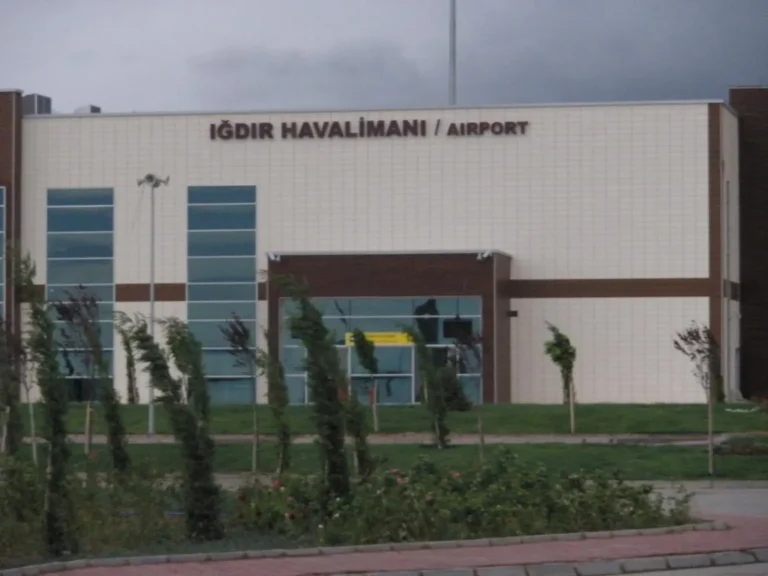 Halal talkIğdır Airport Prayer Rooms (IGD): 2 Mescits, Parking & Terminal GuideIğdır Şehit Bülent Aydın Airport (IGD) officially lists two prayer rooms in its one-storey domestic terminal. The airport…Open guide
 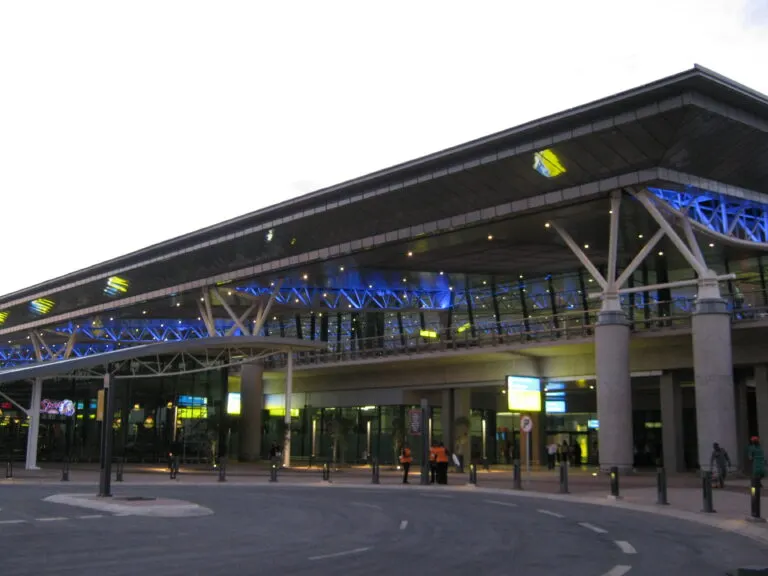 Halal talkKing Shaka Airport Prayer Rooms (DUR): Access GuideKing Shaka Airport has multi-faith prayer rooms for passengers. Ask an airport information desk for the current prayer-room…Open guide
 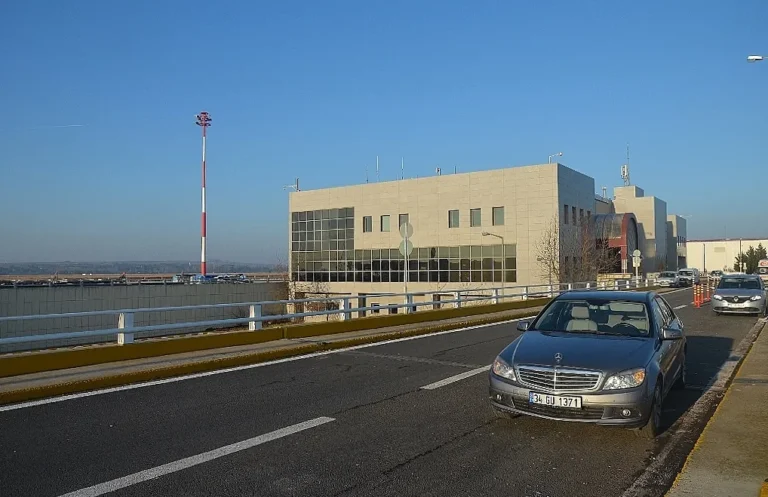 Halal talkÇorlu Atatürk Airport Prayer Rooms (TEQ): Terminal Mescit, Parking & Access GuideTekirdağ Çorlu Atatürk Airport (TEQ) officially confirms that separate women’s and men’s prayer rooms are inside its terminal…Open guide
 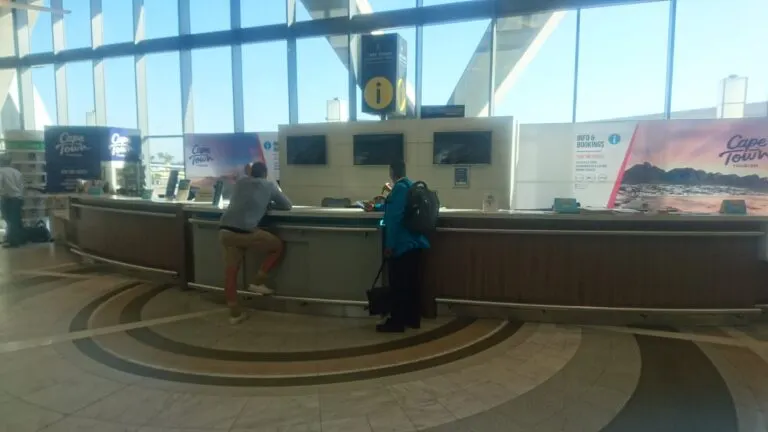 Halal talkCape Town Airport Prayer Room (CPT): Request Access GuideCape Town Airport can accommodate prayer-space requests. Ask any ACSA representative for the current prayer-room location and access…Open guide
 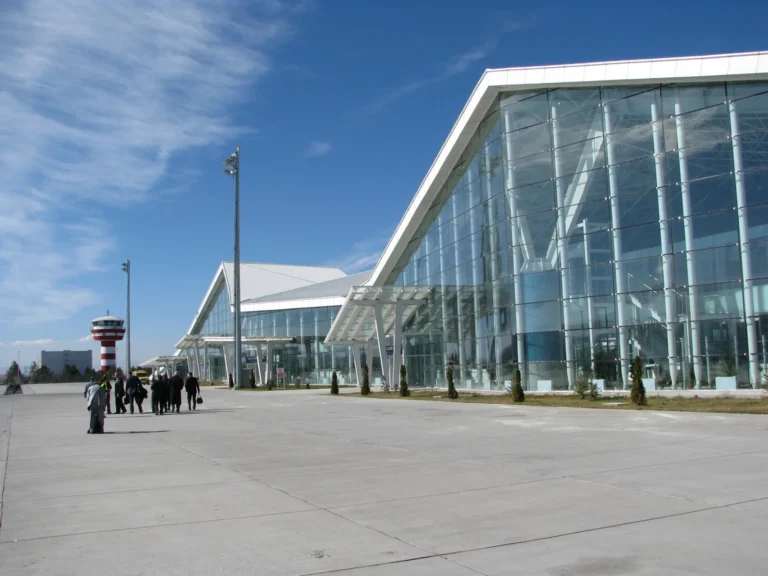 Halal talkKars Harakani Airport Prayer Rooms (KSY): 5 Mescits, Parking & Terminal GuideKars Harakani Airport (KSY) officially lists five prayer rooms: three for men and two for women. Domestic and…Open guide
 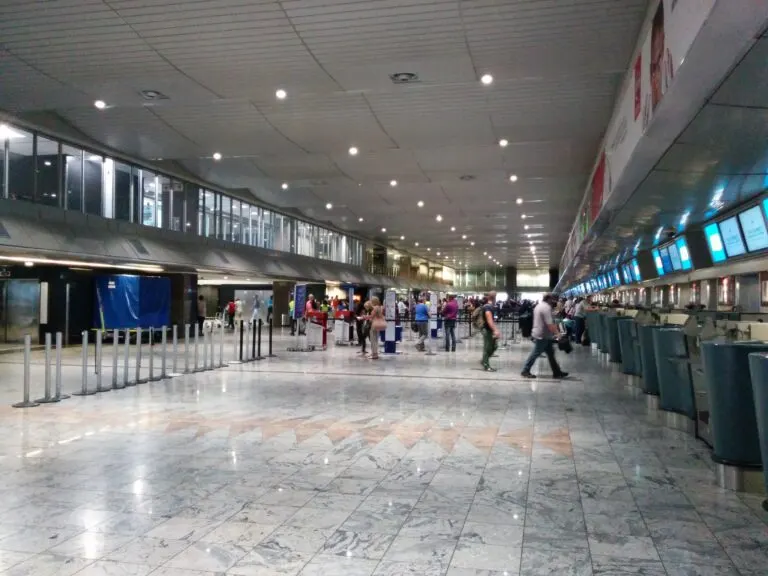 Halal talkOR Tambo Muslim Prayer Facility (JNB): 24/7 GuideOR Tambo Muslim prayer facility is open 24/7 in the basement parkade closest to Terminal A arrivals, with…Open guide
 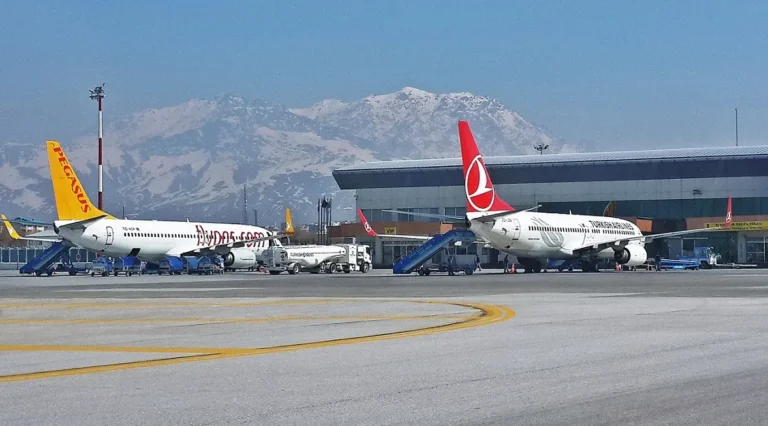 Halal talkVan Ferit Melen Airport Prayer Rooms (VAN): Departure Hall, Gates & Parking GuideOfficial guide to prayer rooms at Van Ferit Melen Airport (VAN), including domestic departure and gate areas, parking…Open guide