Korean Traditional Food Ingredients Explained for Muslims — Halal Hidden Risks Guide

Korean Traditional Food Ingredients Explained for Muslims — What Is Halal What Is Not and the Hidden Non-Halal Risks Nobody Tells You
Understanding Korean traditional food ingredients is the single most important skill for any Muslim traveler visiting South Korea — because the danger is not in the dishes you already know to avoid like pork belly or sausage but in the dozens of everyday Korean foods that appear harmless yet contain hidden pork broth alcohol-based seasonings or fermented ingredients derived from non-halal sources. This comprehensive ingredient-by-ingredient breakdown explains exactly which components of Korean cuisine are halal-safe which are definitively haram and which fall into the gray zone of hidden risks that even experienced Muslim travelers living in Korea sometimes overlook.
The Three Categories Every Muslim Must Know About Korean Food
Every ingredient in Korean cuisine falls into one of three categories for Muslim dietary compliance. Understanding this classification system is the foundation for eating safely in Korea without constantly consulting a scholar or food guide.
| Category | Definition | Examples | Action |
|---|---|---|---|
| Always Halal Safe | Ingredients with no possibility of non-halal contamination regardless of source | Rice vegetables fruits seafood eggs tofu plain noodles water | Eat freely with confidence |
| Hidden Risk Zone | Ingredients that appear innocent but may contain pork alcohol or non-halal animal derivatives | Doenjang gochujang kimchi broth seasonings sauces | Investigate before eating — this is the danger zone |
| Always Avoid | Ingredients that are definitively non-halal | Pork belly samgyeopsal ham sausage pork bone broth lard gelatin | Never consume under any circumstances |
Always Halal-Safe Korean Ingredients
The following Korean food ingredients are universally halal regardless of where they are purchased or how they are prepared. These form the safe foundation of any Muslim diet in Korea.
Rice and Grains
- Bap (밥): Steamed white rice — the foundation of every Korean meal. Always halal. Plain steamed rice contains nothing but rice and water.
- Japgokbap (잡곡밥): Multi-grain rice mixed with barley millet and beans. Always halal.
- Noodles — plain: Wheat noodles (milmyeon) sweet potato starch noodles (dangmyeon) and buckwheat noodles (naengmyeon) in their plain form are halal. The risk comes from the broth and seasoning added during cooking not the noodles themselves.
Vegetables and Fruits
- All fresh vegetables: Every vegetable sold in Korean markets and supermarkets is halal. This includes napa cabbage (baechu) radish (mu) spinach (sigeumchi) bean sprouts (kongnamul) green onions (pa) garlic (manul) mushrooms (beoseot) and perilla leaves (kkaennip).
- All fresh fruits: Korean fruits including Korean pears (bae) tangerines (gyul) strawberries (ttalgi) watermelon (subak) persimmons (gam) and apples (sagwa) are always halal.
Seafood — The Muslim Traveler’s Best Friend in Korea
- All fish: Every species of fish sold in Korea is halal. This includes mackerel (godeungeo) yellow croaker (jogi) hairtail (galchi) salmon (yeoneo) and tuna (chamchi).
- All shellfish and crustaceans: Shrimp (saewu) crab (ge) squid (ojingeo) octopus (nakji) clams (jogae) mussels (honghap) abalone (jeonbok) sea urchin (seongge) and all other seafood is halal according to the majority of Islamic scholars.
- Why this matters: Korea is a peninsula with enormous seafood consumption. Grilled fish raw fish (hoe) fish stew (maeuntang) and seafood hot pots are available everywhere and are inherently halal when prepared without alcohol or pork-based seasonings.
Eggs and Tofu
- Gyeran (계란): Eggs are always halal. Korean cuisine uses eggs extensively — steamed egg (gyeranjjim) fried egg (gyeranfried) egg drop soup (gyeran-guk) and as a topping on bibimbap and other dishes.
- Dubu (두부): Plain tofu is halal. However some tofu dishes are prepared with pork-based broth or meat — always confirm what accompanies the tofu.
The Hidden Non-Halal Risk Zone — Ingredients That Appear Safe but Are Not
This section is the most critical part of this entire guide. The following ingredients are the ones that trick Muslim travelers in Korea every single day because they look vegetarian look innocent or are assumed to be halal when they are not. Memorize this section before your trip.
Doenjang (된장) — Korean Soybean Paste
- What it is: Doenjang is Korea’s most essential fermented condiment — a thick pungent paste made from fermented soybeans and salt. It is the base of doenjang-jjigae (soybean paste stew) one of Korea’s most beloved comfort foods.
- The hidden risk: Traditional doenjang production can include jeotgal (fermented seafood) in the fermentation process. While most commercial doenjang sold in supermarkets is made with soybeans salt and water only some traditional artisanal versions and restaurant-prepared doenjang may contain trace amounts of fermented shrimp or fish.
- The bigger risk: Even when doenjang itself is halal the doenjang-jjigae stew is almost always prepared with a pork or anchovy-based broth base. The paste may be halal but the finished dish almost certainly is not.
- Verdict: Commercial packaged doenjang from supermarkets (look for plain 된장 without meat ingredients listed) is generally considered halal-safe by many scholars. Restaurant doenjang-jjigae should be treated as non-halal unless confirmed otherwise by the restaurant.
Gochujang (고추장) — Korean Red Pepper Paste
- What it is: A sweet spicy fermented paste made from red chili peppers glutinous rice fermented soybeans and salt. Used in bibimbap tteokbokki and many Korean marinades.
- The hidden risk: Like doenjang some traditional gochujang recipes include fermented shrimp in the fermentation process. Most mass-produced commercial gochujang however is manufactured with standardized ingredients that do not include seafood or animal products.
- Verdict: Commercial gochujang from major brands (CJ Haechandle Ottogi) sold in sealed containers at supermarkets is generally halal-safe. The risk increases significantly when gochujang is used in restaurant dishes where it is mixed with other non-halal ingredients.
Kimchi (김치) — Korea’s National Dish
- What it is: Fermented napa cabbage seasoned with red pepper flakes garlic ginger and salted fermented seafood (jeotgal). Kimchi is served at virtually every Korean meal as a side dish.
- The critical hidden risk: Traditional kimchi is made with jeotgal — salted fermented shrimp (saeujeot) or salted fermented anchovies (myeolchijeot). This is not a trace ingredient — it is a fundamental component of authentic kimchi that provides the deep umami flavor. The vast majority of kimchi sold in Korea including supermarket packaged kimchi and restaurant kimchi contains jeotgal.
- Is there halal-safe kimchi: Some brands produce vegan kimchi (비건 김치) that uses only plant-based ingredients without fermented seafood. These are available at health food stores and some online retailers. The Korea Muslim Federation has also approved certain kimchi brands. However vegan kimchi is the exception not the rule — never assume kimchi is halal-safe without checking the ingredients list.
- The alcohol question: Some kimchi production methods add a small amount of rice wine or spirits to aid fermentation. This is another hidden non-halal risk that is rarely disclosed on packaging.
- Verdict: Assume standard Korean kimchi is non-halal unless specifically labeled as vegan or halal-certified. This is one of the hardest realities for Muslim travelers in Korea since kimchi accompanies almost every meal.
Jeotgal (젓갈) — Fermented Seafood
- What it is: A category of salted and fermented seafood products including fermented shrimp (saeujeot) fermented anchovy (myeolchijeot) fermented crab (gejang) and fermented oyster (jeotgal). Used as seasonings and condiments throughout Korean cooking.
- The hidden risk: Jeotgal is halal-safe by itself since it is made entirely from seafood. However the danger is that jeotgal is added to countless dishes — kimchi soups stews and sauces — as a hidden ingredient that is not listed on restaurant menus and is invisible in the finished dish.
- Verdict: Jeotgal itself is halal (it is seafood). Its presence in other dishes makes those dishes non-halal only if the jeotgal itself contains non-halal additives. In practice the main concern is that jeotgal is often combined with pork or alcohol-based ingredients in restaurant preparations.
Korean Alcohol Used in Cooking
- Mirin (미린) — Cooking rice wine: Used extensively in Korean cooking sauces marinades and dipping sauces. Mirin contains approximately 14 percent alcohol and is one of the most common hidden haram ingredients in Korean food.
- Cheongju (청주) — Clear rice wine: Added to soups stews and marinades for flavor. Approximately 12 to 15 percent alcohol content.
- Soju (소주) — Korean distilled spirit: Added to some meat marinades seafood dishes and sauces. Approximately 16 to 25 percent alcohol.
- Makgeolli (막걸리) — Korean rice wine: Used in some traditional pancake (jeon) batters and marinades. Approximately 6 to 8 percent alcohol.
- The critical issue: Korean recipes routinely call for small amounts of rice wine or soju in dishes that otherwise appear completely halal. Bulgogi marinade japchae seasoning tteokbokki sauce and many dipping sauces contain cooking wine. Most Korean cooks add these ingredients automatically as part of their standard recipes without thinking of them as alcohol.
- Verdict: Any dish containing mirin cheongju soju or makgeolli in its preparation is non-halal. Always ask the restaurant: “이 음식에 술이 들어갔나요?” (Did this food contain alcohol?) if you are uncertain about a dish.
Pork-Based Broth — The Invisible Foundation
- The biggest hidden risk in Korean food: Many Korean soups stews and noodle dishes use pork bone broth (dugolgi-tang) as their base. The broth is simmered from pork bones for hours creating a milky white liquid that looks identical to chicken or beef broth.
- Dishes commonly using pork bone broth: Kimchi-jjigae (kimchi stew) Sundubu-jjigae (soft tofu stew) Ramyeon (Korean ramen) Jjamppong (spicy seafood noodle — often pork broth base despite the name) and many guk (soup) varieties served as banchan (side dishes).
- How to identify pork broth: Korean pork bone broth (often called dwaeji-golbi-tang or sagol) has a distinctive milky white color. However beef bone broth (sogol) also appears milky white making visual identification impossible. The only reliable method is to ask the restaurant directly: “국물이 돼지뼈로 끓인 건가요?” (Was this broth made from pork bones?)
- Verdict: Never consume soup or stew at a Korean restaurant without confirming the broth base. This is the single most common way Muslim travelers accidentally consume pork in Korea.
Common Korean Sauces and Seasonings Risk Assessment
| Sauce / Seasoning | Korean Name | Typical Ingredients | Halal Risk Level |
|---|---|---|---|
| Soy sauce | 간장 (ganjang) | Soybeans wheat salt water | Low — generally halal safe |
| Soybean paste | 된장 (doenjang) | Soybeans salt water sometimes jeotgal | Medium — check specific brand |
| Red pepper paste | 고추장 (gochujang) | Chili glutinous rice soybeans salt | Medium — check specific brand |
| Red pepper flakes | 고춧가루 (gochutgaru) | Dried red chili peppers only | Very low — generally safe |
| Sesame oil | 참기름 (chamgireum) | Sesame seeds only | Very low — always halal |
| Cooking wine | 미린/청주 (mirin/cheongju) | Rice alcohol | High — always haram |
| Oyster sauce | 굴소금 (gulsojeom) | Oyster extract sugar salt | Low — seafood based halal |
| Mayonnaise | 마요네즈 (mayonejeu) | Egg oil vinegar | Low — generally halal |
| Bulgogi marinade | 불고기 양념 | Soy sauce sugar garlic pear juice mirin | High — almost always contains mirin |
| Tteokbokki sauce | 떡볶이 소스 | Gochujang sugar garlic often anchovy broth | Medium to high — check broth base |
| Japchae seasoning | 잡채 양념 | Soy sauce sesame oil sugar often mirin | Medium — frequently contains mirin |
Specific Korean Dishes — Halal or Not?
The following table evaluates the most popular Korean dishes that Muslim travelers encounter. This is the practical decision-making guide you need at the restaurant table.
| Korean Dish | Description | Halal Status | Key Risk Factor |
|---|---|---|---|
| Bibimbap | Rice topped with vegetables egg and gochujang | Conditional | Gochujang may contain fermented shrimp. Ask about meat toppings. Gochujang on the side gives you control. |
| Galbi | Grilled marinated beef short ribs | Conditional | Marinade almost always contains mirin. Beef source is not halal-slaughtered. |
| Samgyeopsal | Grilled pork belly slices | Never halal | 100 percent pork. Always avoid. |
| Bulgogi | Marinated grilled beef | Conditional | Marinade contains mirin or cheongju in most recipes. Beef not halal-slaughtered. |
| Japchae | Stir-fried glass noodles with vegetables | Conditional | Seasoning often contains mirin. Meat additions may be present. |
| Kimchi-jjigae | Kimchi stew with tofu and pork | Never halal | Pork base non-halal kimchi cooking wine — triple non-halal risk. |
| Sundubu-jjigae | Soft tofu stew | Conditional | Broth often pork-based. Clam or vegetable versions exist but must be confirmed. |
| Seolleongtang | Milky beef bone soup | Conditional | Beef-based but bones are not halal-slaughtered. Contains no pork broth. |
| Samgyetang | Whole chicken ginseng soup | Conditional | Chicken is not halal-slaughtered. No pork ingredients in the recipe. |
| Tteokbokki | Spicy rice cakes in red pepper sauce | Conditional | Sauce may contain anchovy broth and fish cakes with non-halal additives. |
| Kimbap (Gimbap) | Rice and fillings rolled in seaweed | Conditional | Fillings determine halal status — ham and spam versions are non-halal. Vegetable kimbap is the safest. |
| Jjajangmyeon | Noodles in black bean sauce | Never halal | Sauce always contains pork meat and pork fat. |
| Jjamppong | Spicy seafood noodle soup | Conditional | Despite seafood name the broth is almost always pork bone-based. |
| Mandu | Korean dumplings | Conditional | Pork mandu is most common. Kimchi mandu also usually contains pork. Vegetable mandu is safest but check. |
| Pajeon | Korean pancake (green onion or seafood) | Conditional | Batter sometimes contains makgeolli (rice wine). Seafood pajeon is safer than meat versions. |
| Naengmyeon | Cold buckwheat noodles | Conditional | Broth may be beef-based (not halal-slaughtered) or contain alcohol seasoning. |
| Gimbap Cheonguk | Kimbap chain restaurant | Conditional | Most menu items contain ham spam or pork. Vegetable kimbap and plain ramyeon are options but limited. |
The Korean Beef and Chicken Question — Halal Slaughter
Even when a Korean dish contains no pork or alcohol a fundamental question remains for many Muslim travelers: is the beef or chicken in this dish halal-slaughtered?
- Korean meat is not halal-slaughtered: The vast majority of beef and chicken sold in Korean restaurants and supermarkets is slaughtered using standard Korean methods which do not follow Islamic halal slaughter (dhabihah) requirements. The animal is not slaughtered in the name of Allah and the blood is not fully drained according to Islamic requirements.
- Scholarly opinions vary: Some scholars hold the position that meat slaughtered by People of the Book (Christians and Jews) is permissible for Muslims to consume. Korea is predominantly a non-religious society with a Christian minority. Other scholars maintain that only explicitly halal-slaughtered meat is permissible regardless of the country of origin.
- The practical reality: If you follow the stricter position that only certified halal meat is permissible then all Korean beef and chicken dishes at non-halal restaurants are off-limits. The only exception is meat purchased from halal-certified sources such as the halal butcher shops on Usadan-ro near Seoul Central Mosque or from halal-certified restaurants.
- Halal meat sources in Seoul: Halal-certified lamb beef and chicken are available at halal butcher shops on Usadan-ro near Seoul Central Mosque and at some online retailers through Coupang. Halal restaurants in the Itaewon area including EID Restaurant Makan and Halal Kitchen use certified halal meat in all their dishes.
The Korean Convenience Store — Halal Survival Guide
Korean convenience stores (CU GS25 7-Eleven) are everywhere in Seoul and serve as important food sources for Muslim travelers. Understanding which convenience store items are halal-safe is essential knowledge.
Safe Convenience Store Items
- Triangle kimbap (samgak kimbap) — vegetable varieties only: Look for vegetable-flavored triangle kimbap (채소 삼각김밥). Avoid tuna mayo (the mayo may contain non-halal additives) and all meat varieties (ham spam bulgogi). Check the ingredient list on the back for pork and alcohol.
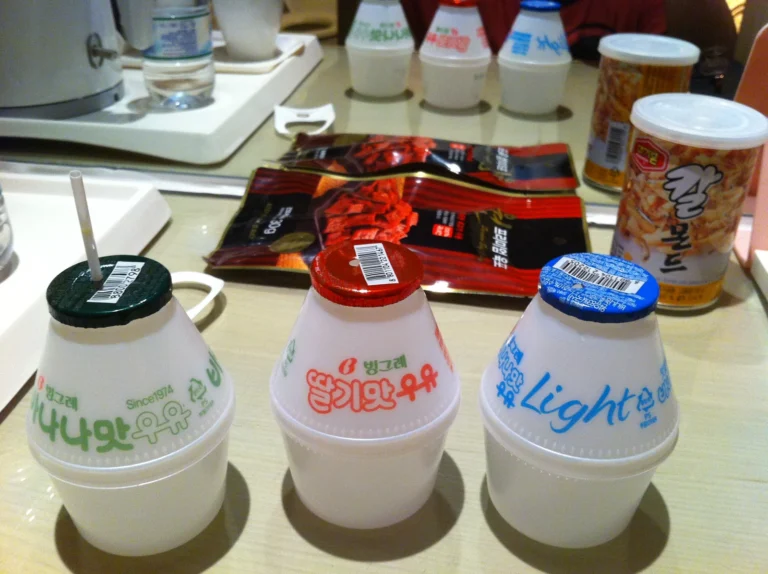
- Banana milk (바나나우유): Korea’s iconic banana-flavored milk drink is halal. Ingredients: milk sugar banana flavoring. No animal-derived additives.
- Plain rice balls (주먹밥): Plain rice wrapped in seaweed with no meat filling. Halal-safe.
- Fresh fruit cups: Pre-cut fruit cups sold at every convenience store — always halal.
- Certain cup noodles: Shin Ramyun (신라면) the most popular Korean instant noodle contains no pork ingredients in its seasoning packet though the powder seasoning includes beef extract that is not halal-slaughtered. For strict halal observance some scholars advise caution. Kimchi-flavored ramyeon typically contains non-halal kimchi powder.
- UHT milk and yogurt: Plain milk (흰우유) strawberry milk (딸기우유) and yogurt drinks are halal-safe.
- Bread — check carefully: Many Korean breads from Paris Baguette Tous Les Jours and convenience stores contain pork-derived gelatin in cream fillings whipped toppings and marshmallow textures. Plain bread rolls and baguettes are generally safe but cream-filled pastries croissants with cream and cakes with gelatin-based toppings should be avoided.
Convenience Store Items to Avoid
- Ham and spam kimbap: Contains processed pork
- Most ready-to-eat meal boxes (도시락): Nearly all contain pork spam or ham
- Sundae (순대): Korean blood sausage — pork intestine stuffed with glass noodles and pork blood
- Eomuk (어묵) fish cake sticks in broth: While fish-based the broth at convenience stores often contains pork extract and the fish cake itself may contain non-halal additives
- Cream-filled pastries: Most contain pork-derived gelatin in the cream or whipped topping
- Haribo and gummy candies: Contain pork gelatin — widely sold at Korean convenience stores
- Some vitamin drinks and jelly snacks: Check for gelatin in the ingredients list
Useful Korean Phrases for Food Shopping
| Korean Phrase | English Meaning | When to Use |
|---|---|---|
| “돼지고기 들어있나요?” | Does this contain pork? | Before buying any food item |
| “술 들어갔나요?” | Does this contain alcohol? | Before ordering at restaurants |
| “돼지뼈 국물인가요?” | Is this pork bone broth? | Before ordering soups or stews |
| “고기 없이 만들어주세요” | Please make this without meat | When ordering at restaurants |
| “할랄 음식인가요?” | Is this halal food? | General inquiry at any food establishment |
| “저는 돼지고기를 먹을 수 없습니다” | I cannot eat pork | Explaining dietary restriction |
| “김치에 젓갈이 들어갔나요?” | Does the kimchi contain fermented seafood? | Checking kimchi ingredients specifically |
Korean Street Food — What Muslim Travelers Can and Cannot Eat
Korean street food is one of the most exciting aspects of visiting Seoul. The street food stalls of Myeongdong Gwangjang Market Hongdae and Dongdaemun offer incredible variety. Here is a halal assessment of the most popular street foods.
| Street Food | Description | Halal Status | Safe Alternative |
|---|---|---|---|
| Tteokbokki | Spicy rice cakes | Risky — broth may contain pork or anchovy | Ask if fish cake is included and confirm broth base |
| Hotteok | Sweet filled pancakes | Usually safe — sugar cinnamon nut filling | Sweet (단) hotteok is typically halal-safe |
| Eomuk (odeng) | Fish cake on sticks in broth | Risky — broth and fish cake additives | Fish cake itself is seafood-based but additives are uncertain |
| Dak-kkochi | Grilled chicken skewers | Conditional — chicken not halal-slaughtered sauce may contain alcohol | Plain salt-seasoned version is closest to halal |
| Gyeranppang | Egg bread | Usually safe — bread batter with whole egg | Check that batter contains no alcohol or pork additives |
| Bungeoppang | Fish-shaped pastry with red bean filling | Usually safe — flour batter with sweet red bean paste | Red bean filling is plant-based halal-safe |
| Twigim | Korean tempura (fried vegetables and seafood) | Conditional — frying oil may be shared with pork items | Vegetable twigim is safest if oil is not shared |
| Tornado potato | Spiral-cut fried potato on a stick | Usually safe — potato oil seasoning powder | Check that seasoning powder contains no pork-derived flavoring |
| Hoddeok | Thick sweet pancake with brown sugar filling | Usually safe — flour dough with brown sugar cinnamon nuts | No animal ingredients in traditional recipe |
Korean Alcohol-Free Dining — Is It Possible?
Korean dining culture is deeply intertwined with alcohol. Soju and beer accompany most Korean restaurant meals and alcohol appears in more food recipes than most people realize. For Muslim travelers seeking completely alcohol-free dining the following strategies work.
- Eat at halal-certified restaurants: The restaurants near Seoul Central Mosque on Usadan-ro are the only places in Seoul where you can eat with absolute confidence that no alcohol was used in cooking. EID Restaurant Makan Halal Kitchen and the various halal shops guarantee zero alcohol in all dishes.
- Request alcohol-free preparation: At Korean restaurants you can request that no cooking wine be added to your dish by saying: “요리에 술 넣지 말아주세요” (Please do not add alcohol to the cooking). Most Korean cooks will accommodate this request though the flavor profile of the dish will change slightly without the cooking wine.
- Seafood restaurants: At fish and seafood restaurants order grilled fish (생선구이) or raw fish (회) with plain side dishes. The fish itself requires no cooking wine and can be prepared with just salt and heat. This is the safest non-halal-restaurant dining option for Muslims who accept non-halal-slaughtered fish as permissible (which it is for virtually all scholars).
▶ Find Halal Restaurants on Usadan-ro Near Seoul Central Mosque on Naver Map
Reading Korean Food Labels — What to Look For
For Muslim travelers buying packaged food at Korean supermarkets and convenience stores the ability to identify non-halal ingredients on Korean food labels is a critical skill. The following Korean words on ingredient lists indicate the presence of non-halal components.
Korean Words That Mean Non-Halal
- 돼지고기 (dwaeji-gogi): Pork — the most important word to recognize on any Korean food label
- 돈육 (dong-yuk): Another term for pork meat
- 베이컨 (beikeon): Bacon
- 햄 (haem): Ham
- 소시지 (sosiji): Sausage
- 라드 (radeu): Lard — pork fat used in cooking
- 젤라틴 (jellatin): Gelatin — often pork-derived unless specifically stated as beef or fish gelatin
- 미린 (mirin): Cooking rice wine — alcohol
- 청주 (cheongju): Clear rice wine — alcohol
- 소주 (soju): Korean spirit — alcohol
- 주정 (jujeong): Alcohol used as a preservative in sauces and condiments
- 정종 (jeongjong): Japanese-style cooking sake — alcohol
- 술 (sul): General word for alcohol
- 젓갈 (jeotgal): Fermented seafood — halal by itself but a red flag for kimchi and other dishes
Frequently Asked Questions About Korean Food for Muslims
Is bibimbap halal for Muslims?
Standard bibimbap at Korean restaurants is halal-conditional. The base ingredients — steamed rice mixed vegetables and a fried egg — are halal-safe. The primary risk is the gochujang (red pepper paste) which may contain fermented seafood and the possibility of meat toppings that are not halal-slaughtered. To make bibimbap as halal-friendly as possible order the vegetable bibimbap (나물 비빔밥) and request gochujang on the side so you can add it in controlled amounts. At halal restaurants like Halal Kitchen in Seoul bibimbap is prepared with halal-certified ingredients making it fully permissible.
Can Muslims eat Korean BBQ?
Korean BBQ at regular Korean restaurants is not halal because the meat is not halal-slaughtered and the marinades almost always contain cooking wine. The one exception is Yang Good BBQ in Gangnam Seoul which serves halal-certified lamb and beef BBQ that Muslim travelers can enjoy with complete confidence. For all other Korean BBQ restaurants the meat itself fails the halal slaughter requirement and the marinade fails the alcohol-free requirement.
Is Korean kimchi halal?
The vast majority of Korean kimchi is not halal because it contains jeotgal (salted fermented shrimp or anchovies) and sometimes rice wine. This includes restaurant kimchi supermarket packaged kimchi and kimchi served as a free side dish at virtually every Korean meal. Vegan kimchi (비건 김채) which omits the fermented seafood and alcohol is available at health food stores and some online retailers but it is not the standard variety served in most Korean establishments. Muslim travelers should assume standard kimchi is non-halal unless specifically confirmed otherwise.
What can Muslims safely eat at Gwangjang Market?
Gwangjang Market in Seoul is famous for its Korean street food but most stalls serve pork-heavy dishes like bindaetteok (mung bean pancake — often fried in pork-tainted oil) and mayak kimbap (which may contain ham). Safe options include fresh seasonal fruit from fruit vendors roasted chestnuts and nuts from nut vendors and plain rice cakes (tteok) without meat fillings from tteok vendors. The market is worth visiting for the cultural experience but Muslim travelers should be selective about food purchases and use the Papago translation app to check ingredients before buying from any stall.
Are there halal-certified products in Korean supermarkets?
Halal certification is growing in Korea but remains limited compared to Muslim-majority countries. Some imported food products from Turkey Malaysia and Indonesia sold at Korean supermarkets carry halal certification logos. The halal shops on Usadan-ro near Seoul Central Mosque stock the widest range of halal-certified products in Korea. For major supermarket chains like E-Mart and Homeplus look for the halal certification symbol on imported products in the international food aisle. The Korea Muslim Federation (www.koreaislam.org) provides halal certification for Korean food manufacturers — products bearing the KMF halal logo are verified as compliant.
Can I eat at Korean BBQ restaurants if I bring my own halal meat?
This is a practical question that some Muslim residents in Korea have explored. Some smaller Korean BBQ restaurants allow customers to bring their own meat purchased from halal butchers and pay only the table charge (상차림 비용 approximately 5,000 to 8,000 KRW per person) for the grill and side dishes. However you must still ensure that the grill surface has been thoroughly cleaned of previous pork residue and that the side dishes (especially kimchi) meet your halal standards. This approach requires advance negotiation with the restaurant owner and is not universally accepted.
Is the Korean ramyeon (ramen) halal?
Most Korean instant ramyeon is not halal-certified. The most popular brand Shin Ramyun (신라면) contains beef extract in its seasoning but no pork ingredients — however the beef is not halal-slaughtered and the seasoning may contain trace alcohol. For strict halal observance look for halal-certified ramyeon options which are beginning to appear in Korean convenience stores. The international food sections of large supermarkets sometimes carry halal-certified instant noodles imported from Indonesia (Indomie) and Malaysia.
What about Korean temple food as a halal option?
Korean temple food (사찰 음식) is entirely plant-based Buddhist cuisine that contains no meat fish alcohol garlic onions or leek. While it was not designed with Islamic dietary laws in mind the absence of all animal products and alcohol makes it inherently compatible with halal requirements. Temple food restaurants in Seoul include Balwoo Gongyang near Jogyesa Temple and Sanchon in Insadong. These restaurants offer a unique dining experience that is both culturally fascinating and halal-compatible for Muslim travelers. Note that temple food is intentionally garlic-free and onion-free which may taste unfamiliar to Muslim palates accustomed to these ingredients.
Navigating Korean food as a Muslim requires knowledge not paranoia. The Korean culinary landscape contains an incredible abundance of halal-safe ingredients — fresh seafood rice vegetables fruits tofu eggs and grains form the backbone of a cuisine that is genuinely enjoyable for Muslim travelers who understand what to choose and what to question. The hidden risks — pork broth mirin gochujang additives and non-halal kimchi — are real but they are identifiable once you know the Korean vocabulary and the right questions to ask. Carry the Korean phrases from this guide on your phone save this article for restaurant reference and when in doubt eat at the halal-certified restaurants near Seoul Central Mosque where every ingredient has been verified for your peace of mind. Korean food culture is one of the richest in the world and with the right knowledge every Muslim traveler can participate in it fully safely and deliciously.
#KoreanFoodHalal #HalalIngredientsKorea #MuslimFoodKorea #KoreanFoodMuslimGuide #HiddenNonHalalKorea #KimchiHalalKorea #KoreanFoodIngredientsGuide #HalalKoreanBBQ #MuslimSeoulFood #KoreanSauceHalalCheck #DoenjangHalal #GochujangHalal #KoreanConvenienceStoreHalal #KoreanStreetFoodMuslim #HalalTravelFoodSeoul #KoreanAlcoholInFood #MuslimDiningKorea #HalalKoreaIngredients #KoreanFoodSafetyMuslim #HiddenPorkKoreanFood
Explore Korea by topic
Choose a focused next step for Korea travel, halal food, prayer planning, or transport.
Explore more published guides
Keep planning with more published Muslim travel guides. New cards appear as you reach the end, or choose to load the next set.
 Halal talkElazığ Airport Prayer Room (EZS): Official Mescit, Parking & Access GuideElazığ Airport (EZS) officially lists a mescit in its domestic terminal. The airport operator confirms parking is available…Open guide
  Halal talkFreetown Airport Prayer Rooms (FNA): First Floor GuideFreetown Airport has dedicated Christian and Muslim prayer facilities on the first floor, accessible to all passengers and…Open guide
  Halal talkIğdır Airport Prayer Rooms (IGD): 2 Mescits, Parking & Terminal GuideIğdır Şehit Bülent Aydın Airport (IGD) officially lists two prayer rooms in its one-storey domestic terminal. The airport…Open guide
  Halal talkKing Shaka Airport Prayer Rooms (DUR): Access GuideKing Shaka Airport has multi-faith prayer rooms for passengers. Ask an airport information desk for the current prayer-room…Open guide
  Halal talkÇorlu Atatürk Airport Prayer Rooms (TEQ): Terminal Mescit, Parking & Access GuideTekirdağ Çorlu Atatürk Airport (TEQ) officially confirms that separate women’s and men’s prayer rooms are inside its terminal…Open guide
  Halal talkCape Town Airport Prayer Room (CPT): Request Access GuideCape Town Airport can accommodate prayer-space requests. Ask any ACSA representative for the current prayer-room location and access…Open guide
  Halal talkKars Harakani Airport Prayer Rooms (KSY): 5 Mescits, Parking & Terminal GuideKars Harakani Airport (KSY) officially lists five prayer rooms: three for men and two for women. Domestic and…Open guide
  Halal talkOR Tambo Muslim Prayer Facility (JNB): 24/7 GuideOR Tambo Muslim prayer facility is open 24/7 in the basement parkade closest to Terminal A arrivals, with…Open guide
  Halal talkVan Ferit Melen Airport Prayer Rooms (VAN): Departure Hall, Gates & Parking GuideOfficial guide to prayer rooms at Van Ferit Melen Airport (VAN), including domestic departure and gate areas, parking…Open guide