Korean Transportation Guide Muslims — Subway Bus KTX Prayer Stops Seoul Getting Around
Korean Transportation Guide for Muslims — Subway Bus KTX and Getting Around Seoul with Prayer Stops
Mastering Korean transportation as a Muslim traveler is the key to unlocking Seoul’s full potential — because the city’s attractions halal restaurants mosques and shopping districts are spread across a vast metropolitan area connected by one of the world’s most efficient public transit systems. Seoul’s subway alone carries over 7 million passengers daily across 23 lines and over 700 stations while an intricate network of buses covers every neighborhood the subway does not reach. For Muslim travelers the challenge is not just getting from point A to point B but planning routes that align with prayer times identifying wudu-friendly restroom stops at key stations and knowing exactly how long each journey takes so you never miss a prayer window while in transit. This complete transportation guide covers every system you will use in Korea with prayer-integrated route planning and practical tips from Muslims who navigate Seoul’s transit network daily.
Seoul Transportation Overview — What Muslim Travelers Need to Know
| System | Coverage | Operating Hours | Fare | Best For |
|---|---|---|---|---|
| Seoul Metro Subway | 23 lines 700+ stations across Seoul and surrounding cities | 5:30 AM to approximately midnight | 1,250 to 1,450 KRW per ride (T-money) | Fastest way to travel between major areas |
| Seoul City Bus | Over 400 routes covering every neighborhood | 4:30 AM to approximately 1:00 AM (varies by route) | 1,200 to 1,300 KRW per ride (T-money) | Reaching areas between subway stations |
| Night Bus (심야버스) | Major routes across Seoul | Midnight to approximately 4:00 AM | 2,150 to 2,550 KRW | Getting home after last subway |
| AREX Airport Railroad | Incheon Airport to Seoul Station | 5:20 AM to 11:20 PM | 4,750 to 9,500 KRW | Fastest airport to city connection |
| KTX High-Speed Train | Seoul to all major Korean cities (Busan Daegu Daejeon Gwangju) | First train approximately 5:15 AM last train approximately 9:30 PM | Varies by destination (see table below) | Inter-city travel |
| Taxi | Everywhere in Seoul | 24 hours | 3,800 KRW base fare standard taxi | Door-to-door convenience especially at night |
The T-money Card — Your Essential Transportation Payment Tool
The T-money card is a rechargeable transportation card that works on every subway line bus route and even some taxis and convenience stores in Korea. For Muslim travelers this single card eliminates the need to buy individual tickets at every station and provides a 100 KRW discount per subway ride compared to cash tickets.
How to Get and Use a T-money Card
- Where to buy: Purchase at any CU or GS25 convenience store at Incheon Airport upon arrival or at convenience stores throughout Seoul. Also available at station ticket machines. The card itself costs approximately 2,500 to 4,000 KRW depending on the design.
- How to load: Add credit at any subway station ticket machine or convenience store. Select the amount in increments of 1,000 KRW. For a typical 3 to 5 day Seoul trip load 20,000 to 30,000 KRW initially.
- How to use on subway: Tap the card on the turnstile reader when entering the station and tap again when exiting. The fare is automatically calculated and deducted based on your entry and exit points.
- How to use on bus: Tap the card on the reader at the front door when boarding and tap again at the back door when exiting. You must tap on both times or you will be charged a penalty fare.
- Transfer discount: When transferring between subway and bus within 30 minutes the transfer is free — you only pay the base fare for the first leg. This means you can take a subway to a station and transfer to a bus to reach your final destination for the price of a single fare.
- Remaining balance refund: Any remaining balance on your T-money card can be refunded at convenience stores (up to 20,000 KRW) or at the T-money headquarters. Small amounts under 20,000 KRW can be spent at convenience stores on snacks and drinks.
▶ Find Convenience Stores at Incheon Airport to Buy Your T-money Card
Seoul Metro Subway — Complete Guide for Muslim Travelers
The Seoul Metro is the backbone of transportation in the capital and the primary system Muslim tourists will use throughout their visit. Understanding its structure key stations and transfer points is essential for efficient travel between prayer locations halal restaurants tourist attractions and your accommodation.
Subway Lines Most Important for Muslim Travelers
| Line | Key Stations for Muslims | Connects To |
|---|---|---|
| Line 1 (Blue) | Seoul Station Jonggak Jongno 3-ga Dongdaemun | AREX from airport traditional markets palaces |
| Line 2 (Green) | Hongdae Gangnam Jamsil Euljiro Samsung | University areas Gangnam shopping COEX Han River parks |
| Line 3 (Orange) | Gyeongbokgung Anguk Yaksu | Palaces Bukchon Halal Kitchen Insadong |
| Line 4 (Sky Blue) | Myeongdong Seoul Station Dongjak Sadang | Myeongdong shopping National Museum Banpo Hangang Park |
| Line 5 (Purple) | Yeouido Gwanghwamun Cheongnyangni | Yeouido Hangang Park historical areas |
| Line 6 (Brown) | Itaewon Noksapyeong Yongsan | Seoul Central Mosque halal food district Itaewon |
Key Subway Stations for Muslim Travelers — Prayer and Wudu Facilities
While subway stations themselves do not have prayer rooms several stations are strategically important for Muslim travelers because of their proximity to mosques halal restaurants and tourist attractions with restroom access for wudu.
- Itaewon Station (Line 6): The most important station for Muslim travelers in Seoul. Exit 3 leads directly to the Usadan-ro halal food district and the Seoul Central Mosque (10-minute uphill walk). Station restrooms can be used for wudu before walking to the mosque.
- Seoul Station (Line 1 and Line 4): Major interchange station connecting AREX from the airport to the Seoul subway network. Spacious restrooms available for wudu. Wide corridors in the underground passages allow brief prayer during transit.
- Anguk Station (Line 3): Serves the Gyeongbokgung Palace Bukchon Hanok Village and Insadong areas. Also the nearest station to Halal Kitchen restaurant (Exit 1 7-minute walk). Station restrooms available.
- Myeongdong Station (Line 4): Serves the Myeongdong shopping and halal restaurant district. Exit 6 leads directly to the main shopping street. Kampungku Malaysian restaurant and Salam Bombay are within 5 minutes walk.
- Gangnam Station (Line 2): Serves the Gangnam area and is the nearest station to Yang Good BBQ halal Korean barbecue restaurant (Exit 11 8-minute walk).
- Gyeongbokgung Station (Line 3): Direct access to the largest palace in Seoul. Exit 5 leads to the palace entrance in 3 minutes.
- Samsung Station (Line 2): Direct underground connection to COEX Mall which has a multi-faith prayer room inside.
▶ Find Itaewon Station on Naver Map — The Most Important Station for Muslim Travelers
Prayer-Integrated Route Planning — How to Plan Subway Journeys Around Salah
The most practical skill for Muslim travelers using Seoul’s subway is timing your journeys between prayer windows. Seoul’s subway is fast — most journeys between major tourist areas take 15 to 30 minutes — and trains run every 3 to 5 minutes during peak hours. This means you can plan surprisingly ambitious itineraries that include all five daily prayers.
Sample Prayer-Integrated Day Using Seoul Subway
| Time | Activity | Location | Subway Route | Duration |
|---|---|---|---|---|
| 7:00 AM | Fajr prayer | Hotel room or Seoul Central Mosque | N/A | 15 minutes |
| 9:00 AM | Gyeongbokgung Palace visit | Line 3 Gyeongbokgung Station Exit 5 | From Itaewon: Line 6 to Line 3 transfer at Yaksu | 20 minutes |
| 11:30 AM | Bukchon Hanok Village walk | Line 3 Anguk Station Exit 2 | One stop from Gyeongbokgung to Anguk | 3 minutes |
| 12:30 PM | Dhuhr prayer | Quiet area near Halal Kitchen or hotel | N/A | 10 minutes |
| 1:00 PM | Halal lunch at Halal Kitchen | Samcheong-ro near Anguk Station | Walking distance from Bukchon | 45 minutes |
| 2:30 PM | N Seoul Tower and Namsan | Line 4 Myeongdong Station Exit 2 + cable car | From Anguk: Line 3 to Line 4 transfer at Chungmuro | 20 minutes |
| 4:00 PM | Asr prayer | Quiet spot on Namsan trail or at tower base | N/A | 10 minutes |
| 5:00 PM | Myeongdong shopping | Line 4 Myeongdong Station Exit 6 | Cable car down to Myeongdong area | 15 minutes |
| 6:30 PM | Maghrib prayer | Hotel or Seoul Central Mosque | From Myeongdong: Line 4 to Line 6 via Seoul Station | 20 minutes |
| 7:00 PM | Halal dinner at EID Restaurant | Usadan-ro Itaewon | Walking from mosque | 60 minutes |
| 9:00 PM | Isha prayer at mosque | Seoul Central Mosque | N/A | 15 minutes |
| 9:30 PM | Han River evening walk | Line 2 or Line 4 to riverside station | From Itaewon: Line 6 to Line 2 at Samgakji | 15 minutes |
| 11:00 PM | Return to hotel | Subway before last train | Various | 20 minutes |
Seoul City Bus System — Reaching Areas the Subway Cannot
Seoul’s city buses complement the subway by reaching neighborhoods and destinations between subway stations. For Muslim travelers buses are particularly useful for reaching hiking trails parks and suburban halal shops that are not directly served by the subway.
Bus Types and Colors
| Bus Color | Route Type | Fare (T-money) | Best For |
|---|---|---|---|
| Blue | Long-distance trunk routes across Seoul | 1,200 KRW | Traveling between major districts |
| Green | Short feeder routes connecting to subway stations | 1,200 KRW | Reaching areas near subway stations |
| Red | Express routes to suburban satellite cities | 2,300 KRW | Traveling to areas outside central Seoul |
| Yellow | Circular routes within central Seoul | 1,200 KRW | Circular sightseeing in downtown Seoul |
| Night Bus | Night routes (prefix N) | 2,150 KRW | After midnight when subway is closed |
Important Bus Routes for Muslim Travelers
- Bus 402: Connects Hannam-dong (near Seoul Central Mosque) to Namsan Cable Car station — the most convenient bus for Muslim travelers heading from the mosque area to N Seoul Tower. Board at the Hannam-dong bus stop near the mosque.
- Bus 03 (Namsan circulation): Circulates through central Seoul including Namsan Mountain area. Useful for reaching N Seoul Tower without walking uphill.
- Airport Limousine Bus: Direct bus service from Incheon Airport to various Seoul neighborhoods including Yongsan and Itaewon area. Fare approximately 17,000 KRW. The most convenient option if your bus route stops near your hotel.
How to Use Seoul City Buses
- Find your bus stop: Bus stops display route maps showing every stop on the route. Use Naver Map or Kakao Map to find the nearest bus stop and the correct bus number for your destination.
- Board the bus: Enter through the front door and tap your T-money card on the reader. The fare is deducted automatically.
- Monitor your stop: The bus displays the next stop name in Korean and English on an electronic screen inside the bus. An announcement in Korean plays before each stop. Watch the screen for your destination stop name.
- Exit the bus: Press the red stop button near the exit door when your stop is announced. Exit through the rear door and tap your T-money card on the reader at the back door. The tap-out is required for the transfer discount system to work correctly.
KTX High-Speed Train — Inter-City Travel for Muslim Travelers
The Korea Train Express (KTX) connects Seoul to every major city in South Korea at speeds up to 305 kilometers per hour. For Muslim travelers visiting Busan Daegu Daejeon Gwangju or other cities the KTX is the fastest and most comfortable way to travel.
KTX Routes and Travel Times from Seoul
| Destination | Departure Station | Travel Time | One-Way Fare (Standard) | Frequency |
|---|---|---|---|---|
| Busan | Seoul Station | 2 hours 15 minutes | 59,800 KRW | Every 15 to 30 minutes |
| Daegu | Seoul Station | 1 hour 40 minutes | 42,600 KRW | Every 20 to 30 minutes |
| Daejeon | Seoul Station | 50 minutes | 23,700 KRW | Every 10 to 20 minutes |
| Gwangju | Seoul Station (via SRT from Suseo) | 1 hour 40 minutes | 46,100 KRW | Every 30 to 60 minutes |
| Gyeongju | Seoul Station (KTX to Singyeongju) | 2 hours 10 minutes | 55,800 KRW | Every 30 to 60 minutes |
| Mokpo | Yongsan Station | 2 hours 30 minutes | 47,800 KRW | Every 30 to 60 minutes |
Prayer Considerations on KTX Trains
- Pray before boarding: KTX journeys are relatively short (50 minutes to 2.5 hours) so the best strategy is to perform the current prayer at your departure station before boarding. Seoul Station has wide corridors and quiet areas suitable for brief prayer.
- Praying on the train: If a prayer time occurs during your KTX journey you can perform a brief prayer seated in your chair. Islamic jurisprudence permits prayer while seated during travel conditions. Face the qibla direction using your phone compass and pray silently in your seat. The train’s movement is not an obstacle to seated prayer.
- Restroom access: Every KTX car has clean restroom facilities at each end. These can be used for performing wudu during longer journeys if needed. However the space is tight and most Muslim travelers prefer to perform wudu before boarding.
- Halal food on KTX: KTX trains have a snack cart selling drinks and packaged snacks. There is no halal-certified food available on board. Bring your own halal food and drinks from convenience stores or halal restaurants before boarding. CU and GS25 convenience stores are located inside or adjacent to every major KTX station.
How to Book KTX Tickets
- Online booking: Book through the Korail website (www.letskorail.com) or the Korail Talk app. The website has an English version. Booking opens 30 days before departure. Early booking offers discounts of up to 30 percent.
- Station ticket machines: Purchase tickets at automated machines at any KTX station. Machines have English language option. Select your destination date and time and pay by T-money card credit card or cash.
- Station ticket counter: Purchase at the manned ticket counter at any KTX station. Staff can assist in English at major stations.
- Discount tips: Book 7 to 30 days in advance for early bird discounts. Group discounts available for 3 or more passengers. Students and seniors receive discounted fares.
- Street hail: Stand at the curb on any major road and raise your hand when an available taxi approaches. Available taxis have a red light on the dashboard (vacant). Green light means occupied.
- KakaoTaxi app: The most reliable way to get a taxi in Seoul. Enter your pickup location and destination in the app — the app shows the estimated fare before you confirm. Payment can be made by card or cash in the taxi. The app works in English.
- Telling the driver your destination: Show the driver the address in Korean on your phone screen. Most taxi drivers do not speak English fluently but can navigate to any destination shown in Korean characters. Use the Naver Map or Kakao Map destination screen to show your route.
- Payment: Most taxis accept T-money cards credit cards and cash. Tap your T-money card on the reader next to the driver when you reach your destination.
- Receipt: Ask for a receipt by saying “영수증 주세요” (yeongsujeung juseyo). Receipts include the taxi company phone number and driver information useful if you leave belongings in the taxi.
- Naver Map (네이버 지도): Korea’s most accurate navigation app with real-time subway bus and walking directions. Search in Korean for best results. Shows real-time arrival information for the next subway train and bus at every station and stop. Available on iOS and Android.
- Kakao Map (카카오맵): Excellent alternative to Naver Map with a cleaner interface. Particularly strong for bus route planning. Available on iOS and Android.
- Kakao Metro: Dedicated subway navigation app showing the fastest route between any two stations with transfer information and estimated travel time. Essential for planning subway journeys. Available on iOS and Android.
- KakaoTaxi: Korea’s most popular taxi-hailing app. Shows estimated fare and driver details before confirming. Works in English. Available on iOS and Android.
- Muslim Pro: Prayer time notifications qibla compass and mosque finder. Set adhan notifications for all five prayers so you never lose track of prayer windows during active sightseeing. Available on iOS and Android.
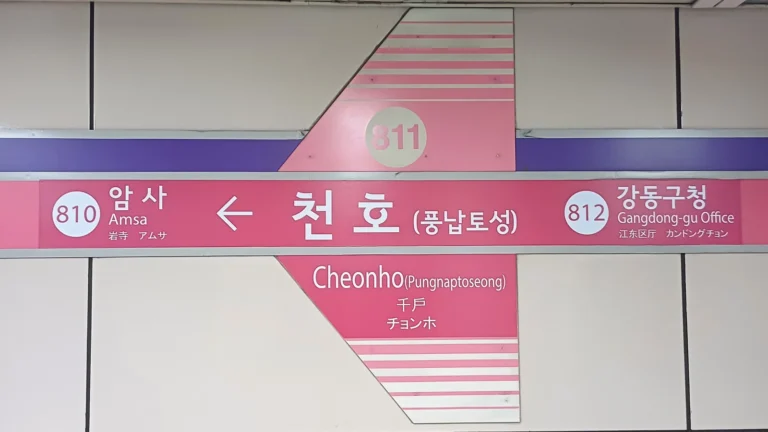
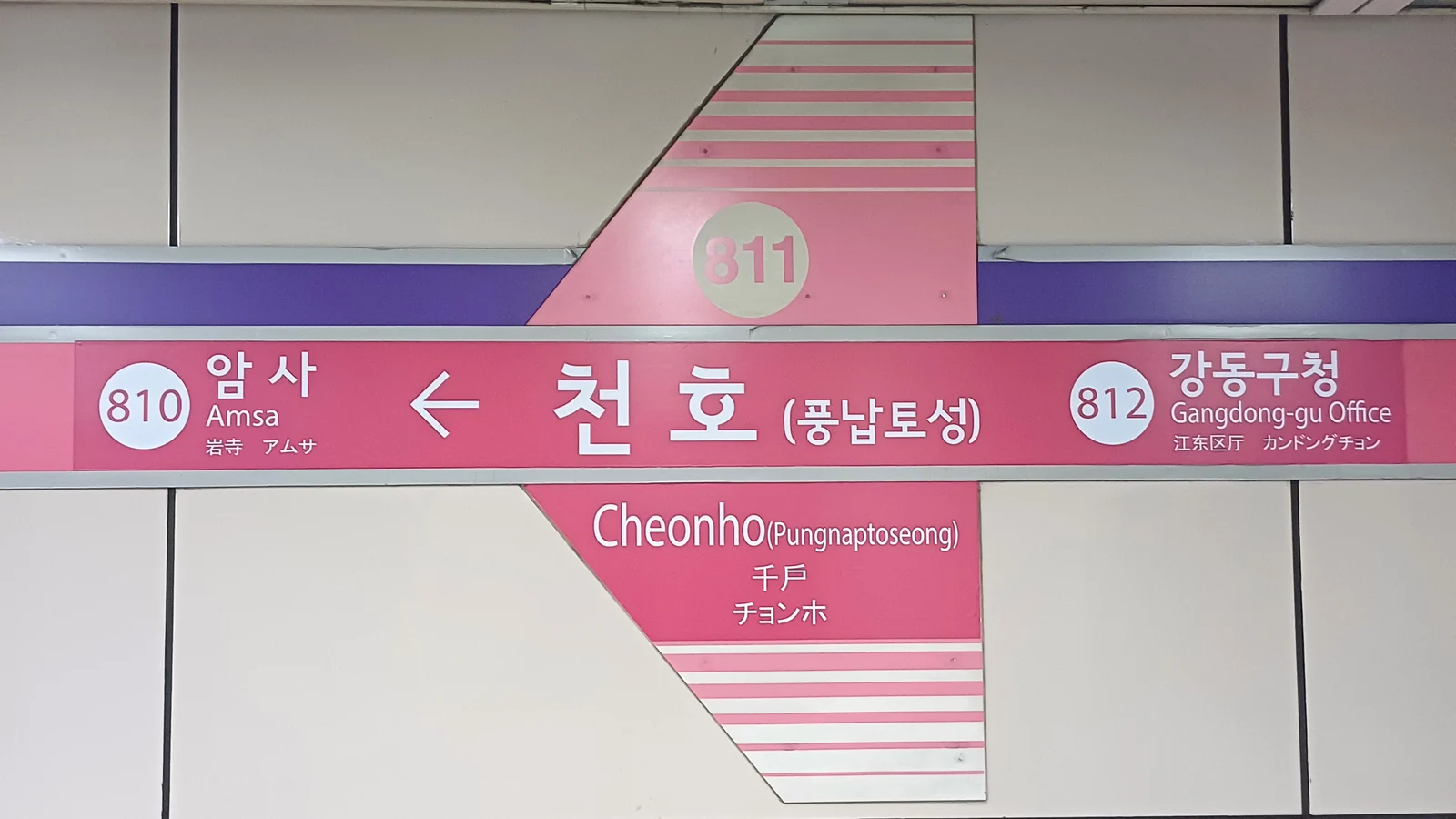
- Subway signage: All subway station names are displayed in Korean English and Chinese characters. Platform announcements are made in Korean English Chinese and Japanese. Every station has a color-coded line map with English station names.
- Bus information: Bus stop displays show route maps in Korean with some English. The electronic display inside buses shows upcoming stops in Korean and English. Use Naver Map to track your bus in real-time and know exactly when to get off.
- Taxi communication: Show the driver your destination address in Korean characters on your phone. The Naver Map and Kakao Map apps display destination information in Korean that taxi drivers can follow using their GPS navigation system.
- Emergency help: Tourist helpline 1330 provides multilingual assistance including English Arabic and other languages. Call this number for any transportation-related emergency or confusion.
- Subway safety: Seoul’s subway is exceptionally safe at all hours. CCTV cameras cover every station and car. Dedicated women-only cars are available on some lines during morning rush hours (7:00 to 9:00 AM) marked with pink signage on the platform. All travelers regardless of gender can use standard cars.
- Bus safety: Seoul buses are safe. Hold onto the handrails as Korean bus drivers are known for rapid acceleration and deceleration. The rear of the bus tends to be bumpiest.
- Taxi safety: All Korean taxis are licensed and metered. Licensed taxis have a blue license plate and company identification displayed inside. Unlicensed taxis (illegal) are extremely rare but should be avoided. Always use a metered taxi or the KakaoTaxi app.
- Night safety: Seoul is one of the safest cities in the world for nighttime travel. Muslim women wearing hijab travel alone on the subway and buses at all hours without safety concerns. Standard urban awareness applies — keep belongings secure and stay in well-lit areas.
- Elevator access: Every subway station has elevators connecting street level to platform level. Follow the elevator signs (marked with wheelchair symbol) from any station entrance.
- Priority seating: Every subway car and bus has designated priority seating for elderly passengers pregnant women and passengers with disabilities. Korean culture strongly respects elders and passengers will readily offer their seats to elderly Muslim travelers.
- Barrier-free stations: All Seoul Metro stations built or renovated after 2005 are fully barrier-free with elevators tactile paving and accessible restrooms.
- KTX accessibility: KTX trains have designated wheelchair-accessible seating and accessible restrooms. Station platforms are level with the train floor for easy boarding.
▶ Find Seoul Station KTX Terminal on Naver Map
Taxis in Seoul — When and How Muslim Travelers Should Use Them
Korean taxis are clean safe metered and available 24 hours. For Muslim travelers taxis are the best option for late-night travel after the subway closes carrying heavy shopping bags from Itaewon halal shops and reaching destinations not served by public transit.
Taxi Types and Pricing
| Taxi Type | Color | Base Fare | Midnight Surcharge | Best For |
|---|---|---|---|---|
| Standard Taxi | Silver or white | 3,800 KRW | 20 percent surcharge midnight to 4 AM | Most trips — reliable and affordable |
| Deluxe Taxi | Black | 6,500 KRW | No midnight surcharge | Luxury service longer trips may be cheaper than standard with midnight surcharge |
| International Taxi | Black with sign | 6,500 KRW | No midnight surcharge | English-speaking drivers — available at major hotels and tourist areas |
| Jumbo Taxi | Various | 6,500 KRW | 20 percent surcharge | Groups of 5 to 10 passengers — book in advance |
How to Hail and Use a Taxi
Useful Taxi Destinations for Muslim Travelers
| From | To | Estimated Fare | Estimated Time |
|---|---|---|---|
| Myeongdong | Seoul Central Mosque Itaewon | 5,000 to 7,000 KRW | 10 to 15 minutes |
| Gangnam | Seoul Central Mosque Itaewon | 10,000 to 15,000 KRW | 20 to 30 minutes |
| Seoul Station | Seoul Central Mosque Itaewon | 5,000 to 7,000 KRW | 10 to 15 minutes |
| Hongdae | Seoul Central Mosque Itaewon | 6,000 to 9,000 KRW | 10 to 20 minutes |
| Itaewon | Noryangjin Fish Market | 8,000 to 12,000 KRW | 15 to 25 minutes |
| Itaewon | Jamsil Lotte World | 12,000 to 18,000 KRW | 20 to 35 minutes |
Practical Navigation Apps for Muslim Travelers
Last Subway Trains — Critical Information for Muslim Travelers
Missing the last subway is a common mistake that results in expensive late-night taxi rides. Each subway line has a different last train time and these times vary by direction and station. The following are approximate last train times from major stations popular with Muslim travelers.
| Line | Last Train from Central Seoul (Approximate) | Key Last Stops |
|---|---|---|
| Line 1 | 11:30 PM to midnight | Check direction — trains run northbound and southbound |
| Line 2 | 11:40 PM to midnight | Circular line — check your direction of travel |
| Line 3 | 11:30 PM to midnight | Both directions from central Seoul |
| Line 4 | 11:30 PM to midnight | Northbound (Danggogae) and southbound (Oido) |
| Line 5 | 11:30 PM to midnight | Both directions |
| Line 6 | 11:30 PM to midnight | Important for Itaewon area — last train from Itaewon approximately 11:45 PM |
After the last subway: Night buses (N-prefix routes) operate until approximately 4:00 AM on major corridors. Taxis are available 24 hours. Use KakaoTaxi app for the most reliable late-night taxi service.
Getting Around Seoul Without Speaking Korean
Seoul’s transportation system is highly navigable for non-Korean speakers thanks to extensive English signage on the subway system and digital tools. Here are practical strategies.
Transportation Safety Tips for Muslim Travelers
Accessibility Information for Elderly Muslim Pilgrims
Korean public transportation is highly accessible for elderly travelers and those with mobility limitations — an important consideration for older Muslims visiting Korea for Hajj preparation or religious tourism.
Frequently Asked Questions About Korean Transportation for Muslims
How do I get from Incheon Airport to the Seoul Central Mosque?
The most efficient route is to take the AREX Express train from Incheon Airport to Seoul Station (43 minutes 9,500 KRW) then transfer to Seoul Metro Line 1 toward Yongsan. At Yongsan Station transfer to Line 6 and ride one stop to Itaewon Station. Exit at Itaewon Station Exit 3 and walk 10 minutes uphill along Usadan-ro to the Seoul Central Mosque. Total travel time is approximately 70 to 80 minutes. Total cost approximately 10,850 KRW. Alternatively take an airport limousine bus directly to the Itaewon area (approximately 17,000 KRW 60 to 90 minutes) or a taxi (approximately 65,000 to 85,000 KRW 60 to 80 minutes).
Can I pray on the Seoul subway?
Performing a full standing prayer on the subway is not practical due to the movement of the train and crowding during peak hours. However during travel conditions Islamic jurisprudence permits seated prayer. You can perform a brief seated prayer in your seat facing the qibla direction using your phone compass. For proper full prayer the best approach is to plan your subway journeys around prayer times — exit at the nearest station perform prayer in a quiet corner of the station or a nearby space and then continue your journey on the next train. Subway trains run every 3 to 5 minutes so the delay is minimal.
What is the cheapest way to get around Seoul?
The cheapest transportation method in Seoul is the subway using a T-money card at 1,250 KRW per ride with free transfers to buses within 30 minutes. A single T-money fare can cover a subway ride plus a bus transfer effectively giving you two modes of transport for the price of one. For travelers on an extremely tight budget the T-money card also provides a 100 KRW discount per ride compared to purchasing single-journey paper tickets at the station machines. Walking between nearby attractions is also highly effective in Seoul’s compact tourist districts — Itaewon Myeongdong and Insadong are all within 2 to 3 kilometers of each other.
How do I use the Seoul subway for the first time?
At any subway station locate the T-money card recharge machines near the entrance. If you already have a T-money card load it with credit. If not purchase a single-journey ticket from the machine by selecting your destination station on the touchscreen — the machine displays a map with all stations in English. The machine calculates the fare and issues a token or paper ticket. Tap the token or T-money card on the turnstile reader to enter. Find your platform by following the signs for your direction of travel and line number. Board the train and ride to your destination. Tap out at the exit turnstile at your destination station.
Is it possible to get to Busan from Seoul by train as a day trip?
Yes. The KTX high-speed train from Seoul Station to Busan Station takes 2 hours 15 minutes each way. A round trip leaves you approximately 6 to 8 hours in Busan — enough time to visit the Busan Islamic Center for prayer have halal lunch explore Haeundae Beach and return to Seoul by evening. First KTX departs Seoul at approximately 5:15 AM arriving Busan at approximately 7:30 AM. Last KTX back to Seoul departs Busan at approximately 9:30 PM. Book early for the best fares — round trip standard class approximately 100,000 to 120,000 KRW.
Do Korean buses and subways have Wi-Fi?
Seoul Metro subway provides free Wi-Fi on all trains and in all stations. The network name is “Seoul Metro Free WiFi” — connect and accept the terms to use. City buses do not have onboard Wi-Fi but mobile data coverage is excellent throughout Seoul making your phone’s data connection reliable everywhere. For the best experience purchase a prepaid SIM card or rent a portable Wi-Fi device at Incheon Airport upon arrival.
How do I get to the mosque from Gangnam by public transportation?
From Gangnam Station (Line 2) take Line 2 toward City Hall direction. At Samgakji Station transfer to Line 6 toward Eungam direction. Ride one stop to Itaewon Station. Exit at Itaewon Station Exit 3 and walk 10 minutes uphill to the Seoul Central Mosque. Total travel time approximately 25 to 30 minutes. Total fare approximately 1,350 KRW with T-money card. This route is the standard path from Gangnam to the mosque and is used daily by Muslim professionals working in the Gangnam business district who attend Friday prayers at the mosque.
Seoul’s transportation system is one of the finest in the world and for Muslim travelers it is the connective tissue that links every element of your Korean experience — from the mosque on the hill to the halal restaurant on Usadan-ro to the palace gardens at Gyeongbokgung to the sunset over the Han River. The subway will carry you between prayers and sightseeing with clockwork precision. The bus will take you to hidden corners of the city that tourists never discover. The KTX will open the entire Korean peninsula to your exploration. And the taxi will bring you home safely when the last train has gone. Master the T-money card download Naver Map and Kakao Metro set your Muslim Pro prayer alarms and step onto the platform with confidence. Korea’s trains and buses are waiting to carry you to every prayer every meal and every unforgettable moment this remarkable country has to offer.
#KoreanTransportationMuslim #SeoulSubwayGuide #SeoulBusGuide #KTXMuslimTravel #SeoulTransportationGuide #TmoneyCardKorea #MuslimTravelSeoul #SeoulMetroGuide #KoreanTrainGuide #SeoulSubwayPrayer #SeoulBusMuslim #SeoulCentralMosqueTransport #KTXFromSeoulToBusan #SeoulPublicTransport #MuslimGettingAroundSeoul #SeoulTaxiGuide #SeoulLastSubway #KoreanTransportationTips #SeoulPrayerStations #SeoulTransitMuslimGuide
Explore Korea by topic
Choose a focused next step for Korea travel, halal food, prayer planning, or transport.
Explore more published guides
Keep planning with more published Muslim travel guides. New cards appear as you reach the end, or choose to load the next set.
 Halal talkElazığ Airport Prayer Room (EZS): Official Mescit, Parking & Access GuideElazığ Airport (EZS) officially lists a mescit in its domestic terminal. The airport operator confirms parking is available…Open guide
  Halal talkFreetown Airport Prayer Rooms (FNA): First Floor GuideFreetown Airport has dedicated Christian and Muslim prayer facilities on the first floor, accessible to all passengers and…Open guide
  Halal talkIğdır Airport Prayer Rooms (IGD): 2 Mescits, Parking & Terminal GuideIğdır Şehit Bülent Aydın Airport (IGD) officially lists two prayer rooms in its one-storey domestic terminal. The airport…Open guide
  Halal talkKing Shaka Airport Prayer Rooms (DUR): Access GuideKing Shaka Airport has multi-faith prayer rooms for passengers. Ask an airport information desk for the current prayer-room…Open guide
  Halal talkÇorlu Atatürk Airport Prayer Rooms (TEQ): Terminal Mescit, Parking & Access GuideTekirdağ Çorlu Atatürk Airport (TEQ) officially confirms that separate women’s and men’s prayer rooms are inside its terminal…Open guide
  Halal talkCape Town Airport Prayer Room (CPT): Request Access GuideCape Town Airport can accommodate prayer-space requests. Ask any ACSA representative for the current prayer-room location and access…Open guide
  Halal talkKars Harakani Airport Prayer Rooms (KSY): 5 Mescits, Parking & Terminal GuideKars Harakani Airport (KSY) officially lists five prayer rooms: three for men and two for women. Domestic and…Open guide
  Halal talkOR Tambo Muslim Prayer Facility (JNB): 24/7 GuideOR Tambo Muslim prayer facility is open 24/7 in the basement parkade closest to Terminal A arrivals, with…Open guide
  Halal talkVan Ferit Melen Airport Prayer Rooms (VAN): Departure Hall, Gates & Parking GuideOfficial guide to prayer rooms at Van Ferit Melen Airport (VAN), including domestic departure and gate areas, parking…Open guide