How to Check K-Beauty Halal Certification: Ingredient and Label Checklist for Muslim Travelers
Last reviewed: August 28, 2026.
Buying K-beauty in Korea can be exciting, but the word halal should never be guessed from a pretty package, a store display, or a social-media post. If I were choosing a product for myself or my family, I would follow a short verification process: identify the exact item, review the current ingredient list, look for product-specific certification evidence, and ask the manufacturer when the evidence is incomplete.
This guide is designed to help you do that without pretending that every vegan, “clean,” or Korean-regulated cosmetic is halal. Korea’s Ministry of Food and Drug Safety (MFDS) regulates cosmetics and uses separate functional-cosmetics pathways for products that make particular claims, including whitening, wrinkle improvement, or UV protection. Those regulatory routes are not halal certification for an individual product.1
Quick answer: what counts as halal evidence?
A product may suit your own standard, but that is different from saying it is halal-certified. The clearest approach is to separate the evidence you have into four levels and use words that match it.
| Evidence level | What you have | Accurate description | Still check |
|---|---|---|---|
| Verified product-level halal certification | A current certificate from an identifiable halal certification body that clearly covers the exact product, product family, SKU, factory scope, or brand scope. | “Halal-certified” only when the certificate scope matches the item in your hand. | Date, certificate holder, variant name, factory or product scope, and package match. |
| Official manufacturer claim | A product-specific statement from the manufacturer or official distributor, but no independently matched certificate. | “The manufacturer states…” rather than “halal-certified.” | Ask whether a current certificate exists and whether this variant is covered. |
| Ingredient review only | A current INCI list on the package or official product page. | “Ingredients reviewed” or “source not confirmed.” | An INCI list may not disclose each raw material’s source, processing, or manufacturing controls. |
| Unknown | No current official ingredient list, certificate, or manufacturer confirmation. | “Unverified.” | Do not infer halal status from marketplace copy, a similar product, or a social post. |
This distinction keeps a shopping decision honest. You can still choose to buy, avoid, or investigate further according to your own religious guidance and comfort level, but a package or guide should not claim more certainty than its evidence supports.
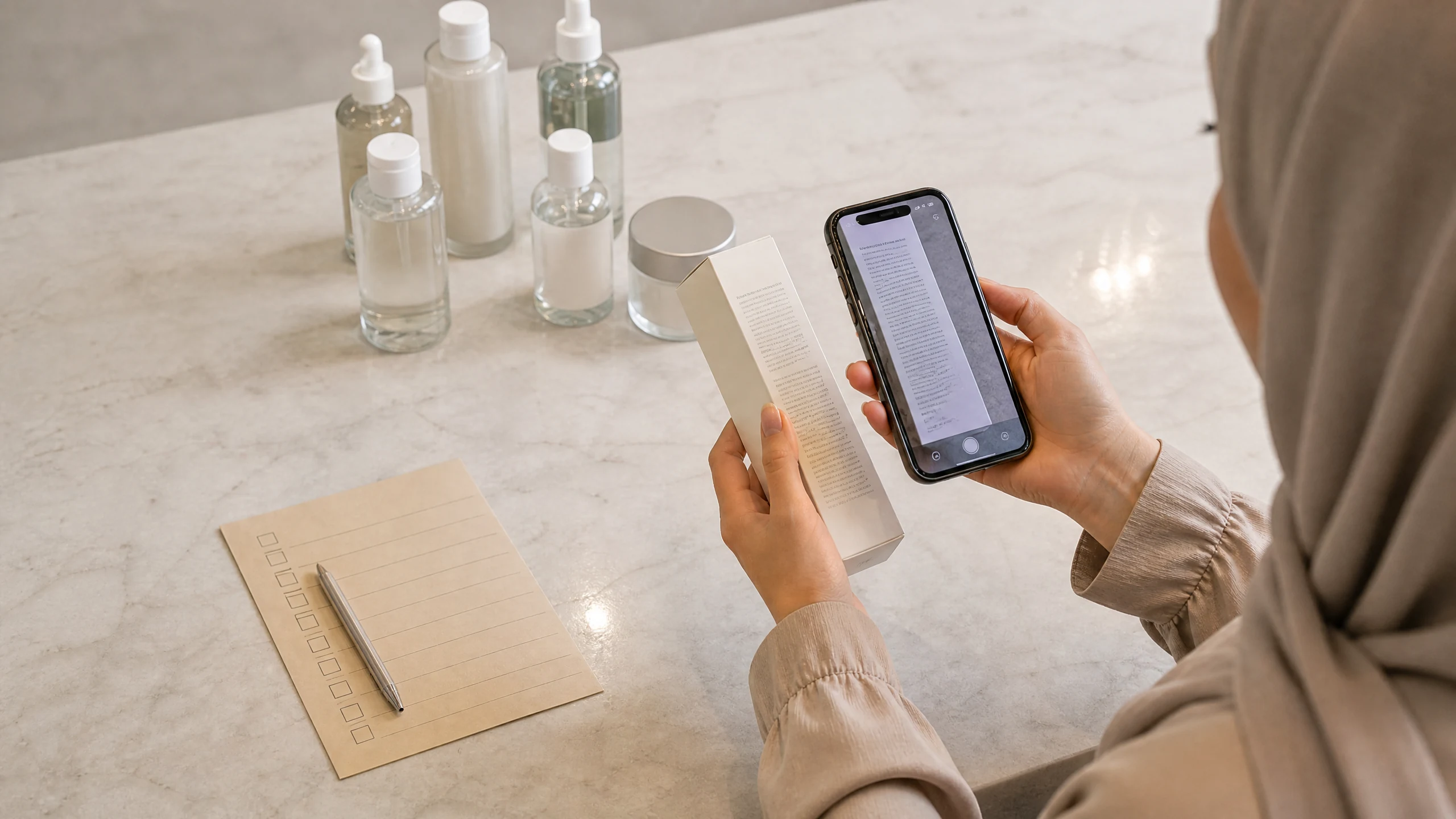
Your in-store K-beauty halal checklist
I would begin with the precise product, not simply the brand. A brand can sell different formulas, sizes, markets, and reformulations, so a claim that applies to one item does not automatically apply to every item on the shelf.
- Photograph the exact product front and back. Keep the product name, shade or variant, volume, and batch information if it is available.
- Find the current ingredient list. Check the physical package, then compare it with the brand’s official Korean or global product page.
- Look for product-specific halal evidence. A retailer logo, influencer post, or general “halal-friendly” label is not enough by itself. Look for the certification body, holder, date, and scope.
- Match the certificate to the exact item. The evidence should cover the same brand, factory, product line, or SKU stated on the package. If the scope is unclear, treat it as an open question.
- Ask the manufacturer or official distributor. Request confirmation for the exact product and market. The manufacturer is the stronger source for a formula or certificate scope.
- Decide according to your own standard. Ingredient-source questions and views on topical alcohol can differ among consumers and scholars. This checklist gathers evidence; it does not replace your own guidance.
Ingredients that may need a source question
Ingredient names can help you decide what to ask, but they rarely prove a source or halal status by themselves. I would not label an ingredient automatically halal or automatically non-halal without product-specific evidence. Instead, I would use the label to ask a focused question.
| Label term or group | Why it may need clarification | Focused question |
|---|---|---|
| Collagen, gelatin, keratin, elastin | These may have animal-derived, marine, plant-based, or synthetic sources depending on the formula. | “What is the source of this ingredient in this exact product?” |
| Glycerin, stearic acid, fatty acids, emulsifiers | Materials can have different feedstocks or processing routes, while INCI labels may not state which one applies. | “Can you confirm the raw-material source or provide halal documentation for this formula?” |
| Fragrance, flavor, aroma | The label term may be broad and may not disclose every component or carrier. | “Can you confirm whether this product has a current halal certificate or manufacturer halal statement?” |
| Alcohol-related terms | Labels use different alcohol-related ingredient names, and consumer or scholarly standards on topical use can differ. | “Can you share the complete current INCI list and any halal documentation?” |
| Animal-derived or animal-associated materials | Names such as beeswax, lanolin, and snail secretion filtrate may raise different questions for different consumers. | “What is the source and production method, and is this exact product covered by a halal certificate?” |
The point is not to turn every ingredient into a warning. It is to avoid a confident claim from incomplete information. If the source matters to you and the manufacturer cannot confirm it, the honest status is unverified.
Do vegan, cruelty-free, “clean,” or functional-cosmetics labels mean halal?
No single one of these labels is a substitute for halal certification. A vegan claim may be relevant to ingredients, and a cruelty-free claim addresses a different issue. “Clean” is a marketing term whose meaning can vary. An MFDS functional-cosmetics pathway relates to safety and effectiveness rules for particular cosmetic functions; it is not a halal certificate.1
MFDS also publishes a Korean cosmetic regulatory framework and regulations concerning cosmetic labeling, advertising, and raw-material reporting. They provide useful regulatory context, but they do not verify the halal status of an individual product.2
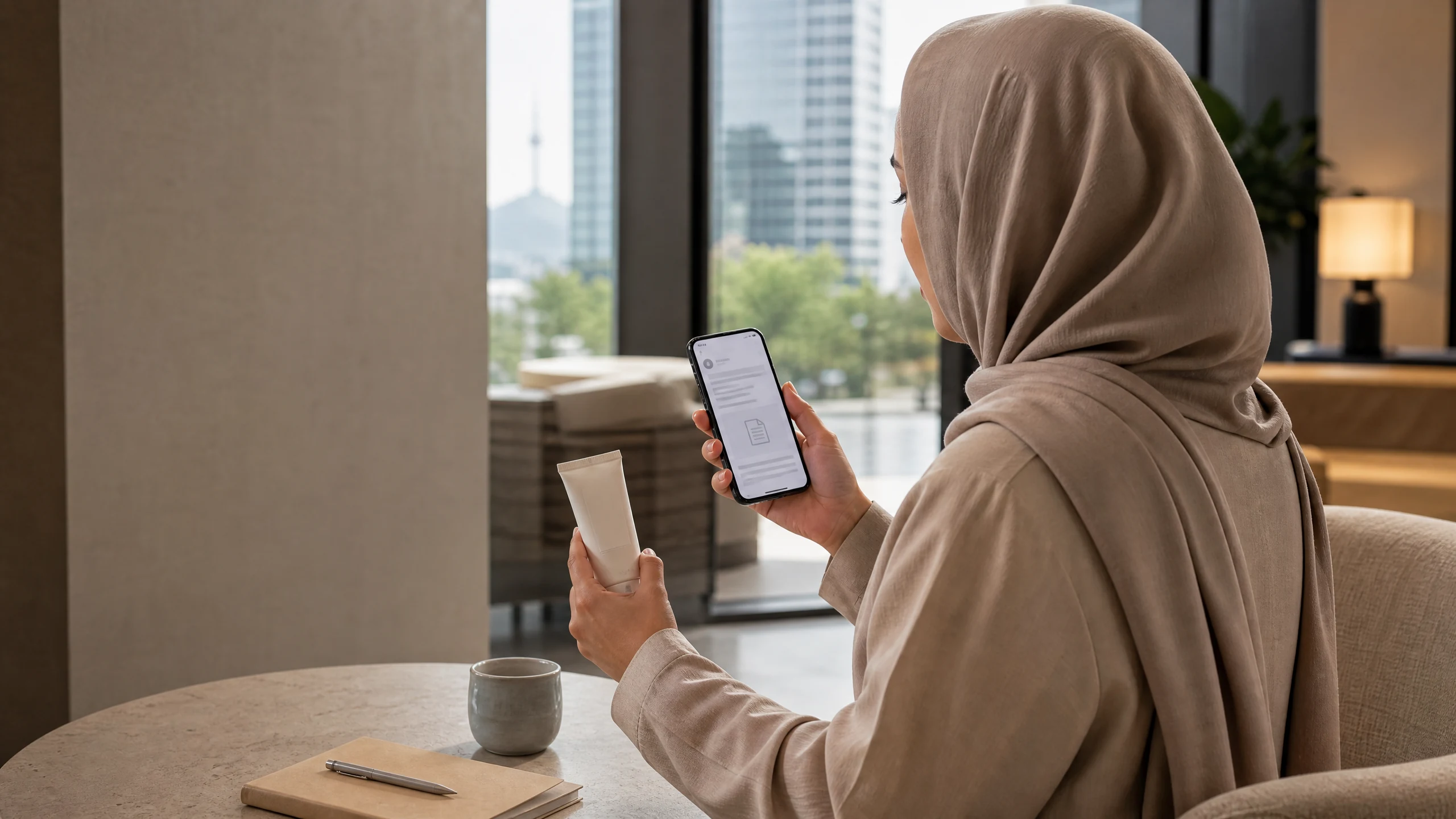
Four short questions to send a manufacturer
When the package does not give a clear answer, a calm, specific message works better than asking whether a whole brand is halal. I would share the exact product name, variant, and a package photograph, then ask:
- Is this exact product currently halal-certified?
- Which halal certification body issued the certificate, and is there a current certificate or product list I can review?
- Does the certificate cover this exact product or SKU, and which factory or production scope does it cover?
- Can you share the current full INCI ingredient list for the Korean-market product?
Useful Korean phrases in a shop
| English | Korean | Pronunciation guide |
|---|---|---|
| Is this product halal-certified? | 이 제품은 할랄 인증을 받았나요? | i jepumeun halal injeung-eul badatnayo? |
| May I see the current ingredient list? | 최신 전성분표를 볼 수 있나요? | choesin jeonseongbun-pyo-reul bol su innayo? |
| Can the manufacturer confirm this product? | 제조사에서 이 제품을 확인해 줄 수 있나요? | jejosa-eseo i jepum-eul hwagin-hae jul su innayo? |
| Does the certificate include this exact product? | 인증서에 이 제품이 포함되어 있나요? | injeungseo-e i jepumi pohamdoeeo innayo? |
Showing the written Korean on a phone may be clearer than pronunciation in a busy shop. If staff cannot confirm the product, that is not a problem to argue about. Take a photograph, contact the manufacturer later, or choose an item with clearer evidence.
A simple decision path before you pay
If you have a current, product-matched certificate, keep a screenshot with the item details. If you have only a manufacturer claim, describe it honestly as a claim and request the evidence. If you have only an ingredient list, treat it as a tool for questions—not a certificate. If you have none of these, leave the product in the unverified category.
That small discipline helps you shop with confidence without turning a personal preference, general retail label, or older online post into an unsupported halal claim. Formulas, certificates, packaging, and distributors can change, so always verify the current product and operator information before you buy.
References
- Ministry of Food and Drug Safety (MFDS), Approval Process — Cosmetics / Functional Cosmetics.
- Ministry of Food and Drug Safety (MFDS), Cosmetics Regulations.
Explore Korea by topic
Choose a focused next step for Korea travel, halal food, prayer planning, or transport.
Explore more published guides
Keep planning with more published Muslim travel guides. New cards appear as you reach the end, or choose to load the next set.
 Halal talkElazığ Airport Prayer Room (EZS): Official Mescit, Parking & Access GuideElazığ Airport (EZS) officially lists a mescit in its domestic terminal. The airport operator confirms parking is available…Open guide
  Halal talkFreetown Airport Prayer Rooms (FNA): First Floor GuideFreetown Airport has dedicated Christian and Muslim prayer facilities on the first floor, accessible to all passengers and…Open guide
  Halal talkIğdır Airport Prayer Rooms (IGD): 2 Mescits, Parking & Terminal GuideIğdır Şehit Bülent Aydın Airport (IGD) officially lists two prayer rooms in its one-storey domestic terminal. The airport…Open guide
  Halal talkKing Shaka Airport Prayer Rooms (DUR): Access GuideKing Shaka Airport has multi-faith prayer rooms for passengers. Ask an airport information desk for the current prayer-room…Open guide
  Halal talkÇorlu Atatürk Airport Prayer Rooms (TEQ): Terminal Mescit, Parking & Access GuideTekirdağ Çorlu Atatürk Airport (TEQ) officially confirms that separate women’s and men’s prayer rooms are inside its terminal…Open guide
  Halal talkCape Town Airport Prayer Room (CPT): Request Access GuideCape Town Airport can accommodate prayer-space requests. Ask any ACSA representative for the current prayer-room location and access…Open guide
  Halal talkKars Harakani Airport Prayer Rooms (KSY): 5 Mescits, Parking & Terminal GuideKars Harakani Airport (KSY) officially lists five prayer rooms: three for men and two for women. Domestic and…Open guide
 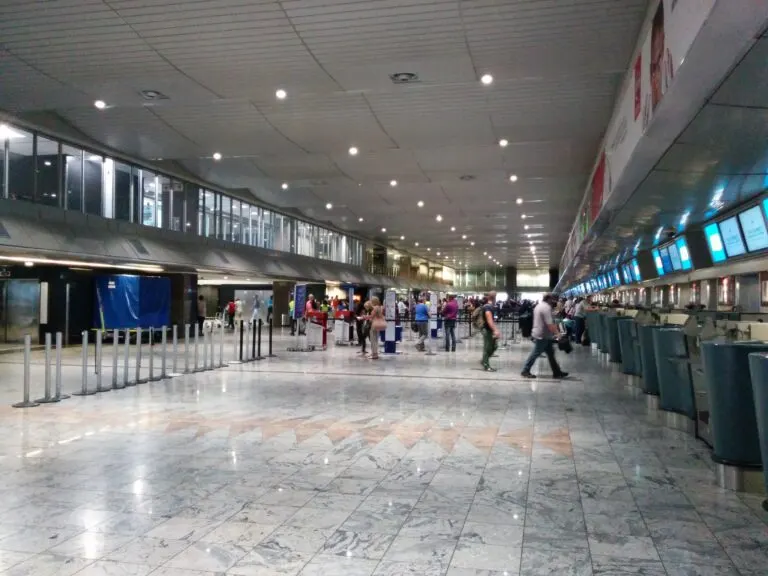 Halal talkOR Tambo Muslim Prayer Facility (JNB): 24/7 GuideOR Tambo Muslim prayer facility is open 24/7 in the basement parkade closest to Terminal A arrivals, with…Open guide
 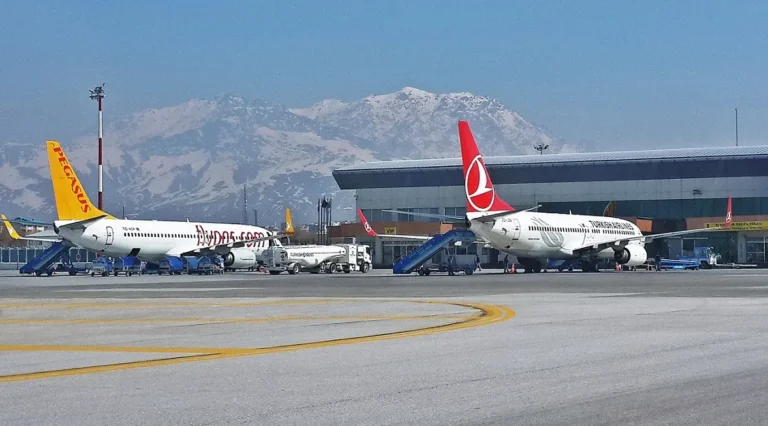 Halal talkVan Ferit Melen Airport Prayer Rooms (VAN): Departure Hall, Gates & Parking GuideOfficial guide to prayer rooms at Van Ferit Melen Airport (VAN), including domestic departure and gate areas, parking…Open guide